


01 Aug Branded Photo Booth Activation That Performs
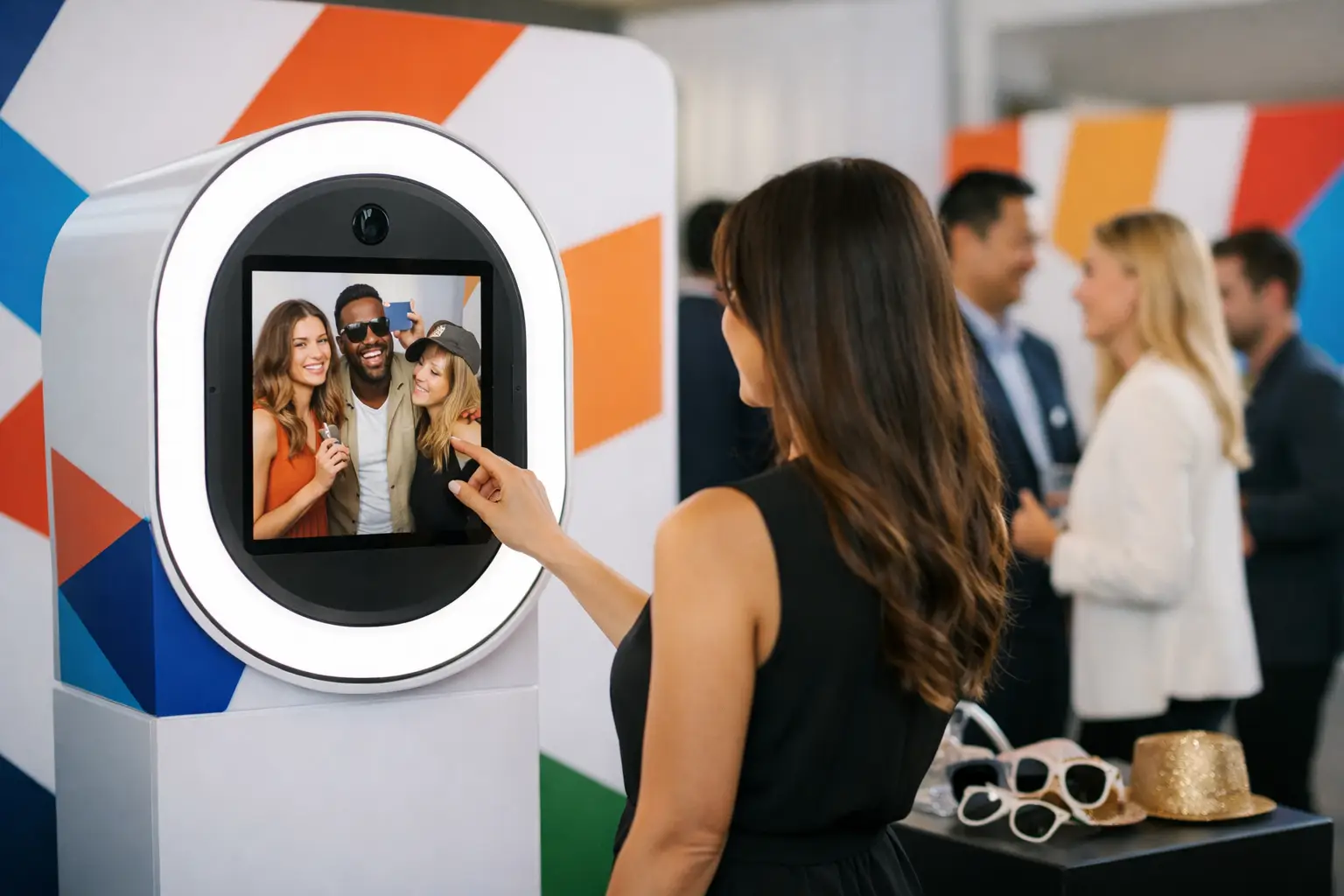
A branded photo booth activation is not simply a place for guests to take pictures. It is a designed moment within the event: one that invites participation, carries a campaign’s visual identity, and produces content people are genuinely proud to share. When it is executed with intention, the booth becomes one of the most visible expressions of your brand in the room.
For marketing teams, experiential agencies, and event planners, that distinction matters. A generic setup may create a few casual snapshots. A polished activation can create a steady flow of guest engagement, high-quality branded assets, and a memorable touchpoint that continues working after the event ends.
The Booth Is Part of the Brand Experience
The strongest event activations give guests something to do, not just something to look at. A photo booth succeeds because it gives people a clear reason to step in, interact, laugh, pose, and leave with a tangible reminder of the experience. The branding should support that energy rather than interrupt it.
That requires more than placing a logo in the corner of a photo. Every visible element contributes to the impression: the booth’s physical design, screen interface, backdrop, lighting, custom overlay, animation, props, and sharing experience. A clean visual system makes the activation feel like an intentional extension of the campaign rather than an add-on placed near the bar.
For a product launch, the creative direction may draw directly from packaging, campaign photography, or a new product color story. At a conference, it may use a refined step-and-repeat, branded frames, and lead-friendly digital delivery. At a gala or wedding, the emphasis may shift toward editorial portrait lighting and elegant keepsake imagery. The format changes, but the principle stays the same: guests should recognize the event’s point of view before they ever see a logo.
What Makes a Branded Photo Booth Activation Effective?
An activation performs when it balances guest appeal with brand utility. If it is beautifully branded but difficult to use, guests will walk past it. If it is entertaining but visually disconnected from the event, it will generate content without building recognition. The goal is a moment that feels effortless for guests and strategically useful for the host.
Make the Interaction Immediate
People rarely need extensive instructions at a busy event. The best experiences communicate their purpose in seconds. An inviting booth placement, a clear screen prompt, flattering light, and an attendant who knows how to keep the energy moving all reduce friction.
The creative concept should be equally easy to understand. Guests may choose a digital backdrop, create a short 360 video, record a message, or pose within a custom set. One strong interaction is usually more effective than several complicated choices. A photo booth is a social catalyst, and its design should keep the line moving without making the experience feel rushed.
Build for the Camera, Not Just the Floor Plan
A branded environment can look impressive in person and still fall flat in photos if lighting, proportions, and contrast have not been considered. Since the resulting images will travel through email, text messages, social feeds, and internal communications, every capture should be treated as a piece of campaign creative.
Professional DSLR-quality imagery, thoughtfully placed lighting, and a backdrop with depth make a noticeable difference. They help guests look their best and give the brand a more elevated presence in every shared image. This is especially valuable for corporate events where content may later appear in recaps, presentations, recruiting materials, or press coverage.
A custom build is not always necessary. Sometimes a modern open-air booth paired with a beautifully produced backdrop and a distinctive digital template is the right choice. For a larger footprint or an immersive campaign, a branded set, glam portrait station, or 360 video booth can create a bigger visual statement. The right format depends on the guest count, venue, campaign objective, and how much space the event can dedicate to the experience.
Give Guests a Reason to Share
Sharing is not automatic just because a photo exists. Guests share when the image is flattering, the content feels current, and the branding enhances the image instead of overwhelming it. A subtle, well-positioned mark often carries more premium value than a crowded design full of slogans and graphics.
Digital delivery should feel immediate and polished. A branded sharing screen or gallery can reinforce the campaign while allowing guests to receive their images quickly. For teams measuring engagement, custom data capture and opt-in workflows may be appropriate, but they should be presented clearly and respectfully. A guest who feels pressured to provide information is less likely to enjoy the moment or associate it positively with the brand.
Design Decisions That Change the Result
A high-end activation is often defined by small choices that guests may not consciously identify but will absolutely feel. The shade of a backdrop, the finish of the booth enclosure, the typography on a template, and the way an attendant greets a guest all shape the final impression.
Start with the event’s visual hierarchy. What should guests remember first: the product, the campaign line, the event identity, or the feeling of the celebration? That answer should guide the creative. A logo may be central for a trade show sponsorship, while a more understated approach may suit a luxury client dinner or an upscale wedding reception.
Then consider the image itself. Is the desired outcome a polished portrait, an energetic boomerang, a cinematic 360 clip, or a playful animated GIF? Each creates a different kind of guest behavior and demands different production choices. A 360 booth can energize a large party and create dynamic video content, but it needs sufficient space, thoughtful traffic flow, and guests who are comfortable stepping into the spotlight. A portrait-focused booth may be quieter and more refined, making it ideal for formal environments where quality matters more than spectacle.
The backdrop deserves the same attention. It should be camera-ready from every angle, free of distracting glare, and scaled correctly for groups. Branded scenery works best when it offers texture, dimension, or a visual point of view. A flat logo wall can serve a purpose, particularly for press-facing moments, but it does not always create the most compelling guest photo.
Operational Details Protect the Guest Experience
Creative direction gets people interested. Event execution determines whether they leave impressed. A branded photo booth activation needs an experienced team that understands arrival windows, venue access, power requirements, Wi-Fi considerations, installation timing, and guest flow.
Placement is one of the most consequential decisions. The booth should be visible enough to attract attention but not positioned where a line blocks registration, dinner service, exhibitor traffic, or an important sightline. At a conference, it may belong near a lounge or networking area. At a reception, it often performs best where guests can discover it naturally between key moments, rather than in a hidden side room.
Staffing also changes the experience. A professional attendant does more than troubleshoot equipment. They welcome guests, guide group poses, manage the queue, protect the set, and maintain a polished atmosphere. Their presence helps the activation feel hosted rather than self-service, which is particularly important for premium brand events and high-profile guest lists.
It is also wise to plan for the realities of the venue. Strong ambient light can affect certain setups. Limited loading access may change installation timing. Tight floor plans may call for a compact design rather than a large experiential build. These are not reasons to compromise the concept. They are the details that allow the concept to be delivered with precision.
Turning Event Content Into Lasting Value
The immediate excitement of the booth is only part of its value. The resulting photos and videos can extend the event story well beyond the final guest departure. With the right permissions and content plan, assets may support social recaps, post-event email, internal culture communications, sponsor reporting, and future event promotion.
This is where an editorial eye matters. Rather than treating every capture as interchangeable, select the strongest images that reflect the energy of the room, the quality of the experience, and the people behind the event. Brand teams can use those moments to show participation rather than merely claim it.
Pic Station approaches these installations as complete visual experiences, pairing modern booth technology with polished imagery, tailored creative, and professional event support. The result is designed to feel as considered in a guest’s camera roll as it does on the event floor.
When choosing a photo activation, ask a more useful question than whether guests will use it. Ask what you want them to remember, share, and associate with your event afterward. The right answer will lead to an experience that earns attention in the moment and keeps its visual impact long after the room clears.