
12 Nov Event Visual Storytelling Guide for Better Events
A beautiful room is not automatically a memorable event. The moments guests carry forward – and the images they share – come from a visual story with a point of view. This event visual storytelling guide helps planners and brand teams shape that story before the first guest arrives, then capture it with the polish and intention a high-profile event deserves.
For a product launch, the story may be discovery, anticipation, and a bold first reveal. For a gala, it may be generosity, connection, and celebration. For a wedding, it is often the gathering of people and details that make a milestone feel entirely personal. The camera should not merely document what happened. It should make the event’s atmosphere, purpose, and energy visible.
Start the Event Visual Storytelling Guide With One Clear Idea
Every strong visual plan starts with an editorial premise. Before selecting a photo booth backdrop, approving a shot list, or booking video coverage, define the feeling people should recognize in the final gallery and recap film.
A corporate conference might need to communicate momentum and leadership. An experiential activation may need to make a product feel tactile, social, and distinctly on-brand. A private celebration might prioritize warmth, movement, and the people behind the occasion. That central idea becomes a decision filter for everything from lighting direction to the pace of the video edit.
Avoid trying to communicate every message at once. A brand event can show innovation, hospitality, executive presence, and guest excitement, but one of those should lead. When every frame is asked to say everything, the final content often feels generic.
Write a concise creative direction that your production partners, agency team, venue, and internal stakeholders can use. It might include the desired mood, core colors, priority audiences, brand cues, and a few visual references. This is not about copying another event. It is about agreeing on the visual standard before production begins.
Design Moments, Not Just Decor
The strongest event imagery comes from designed interactions. A floral installation, scenic wall, or branded step-and-repeat may look impressive, but it needs a reason for guests to step into the frame. Consider the experience from a guest’s perspective: Where do they pause? What do they touch? What prompts a genuine reaction? When does the room reach its highest energy?
A premium photo booth activation can create that invitation naturally. With editorial-quality lighting, a refined enclosure or open-air setup, custom overlays, and an attentive professional on site, it gives guests an easy way to participate in the story rather than simply observe it. The image becomes both a keepsake and a shareable extension of the event.
Interactive video moments can add another layer. A 360 video booth is especially effective when the event calls for movement, fashion-forward styling, celebration, or a high-energy branded moment. It is not the right choice for every program. A more restrained leadership summit may benefit from elevated portraiture and documentary coverage instead. The format should match the room, audience, and objective.
Think in chapters. The arrival sequence establishes anticipation. A welcome drink, branded portrait station, or striking entrance can set the visual tone immediately. The main program provides purpose and scale. Later, entertainment, awards, and candid guest interactions deliver the emotional release that gives a recap its momentum.
Build a Shot Plan Around What Matters
A shot list is not a checklist of every possible photo. It is an agreement about what cannot be missed. For planners, it is also one of the best ways to protect the investment in event photography and videography when schedules shift or rooms get busy.
Prioritize three categories: the environment, the people, and the proof of impact. Environmental coverage captures venue scale, lighting, custom details, signage, tablescapes, sponsor integration, and the overall design. People coverage should include speakers, executives, VIPs, guests, and the candid exchanges that make an event feel alive. Proof of impact captures full rooms, audience attention, product interaction, applause, networking, and visible brand engagement.
Give Key People a Clear Capture Window
Executives, hosts, award recipients, and wedding family members are often unavailable precisely when photographers need them. Build brief, intentional portrait windows into the run of show. Five focused minutes in a well-lit setting can produce polished images that are difficult to recreate later in a crowded ballroom.
For corporate events, identify the people who need individual images, paired portraits, and group photos in advance. For private events, designate a point person who can help gather family or wedding-party combinations without pulling the couple or host away from the celebration for long.
Plan for Both Wide Shots and Human Details
A wide room image establishes scale. A close frame of hands adjusting a place card, a guest laughing during a toast, or a speaker preparing backstage provides texture. The final gallery needs both. Wide shots tell viewers where they are; detail shots tell them how the event felt.
The same principle applies to video. Establishing shots, décor details, and transition footage give a recap visual rhythm, while human reactions give it emotional credibility. Without those smaller moments, even a beautifully produced event can look flat on screen.
Make Branding Present Without Making It Heavy-Handed
Branded visuals perform best when the brand is integrated into the experience rather than pasted onto it. The goal is recognition, not visual clutter.
Use your brand palette, typography, campaign language, and product cues selectively across the environment. In a photo activation, that may mean a custom backdrop, digital template, branded microsite, or thoughtfully placed prop element. In event photography, it may mean ensuring signage and product moments are captured cleanly without turning every guest photo into an advertisement.
There is a trade-off here. A heavily branded frame may satisfy a campaign requirement but reduce the likelihood that guests will save or share it. A more understated design can feel elevated and wearable while still making the host unmistakable. The best approach depends on whether your priority is direct campaign visibility, guest participation, or long-term content versatility.
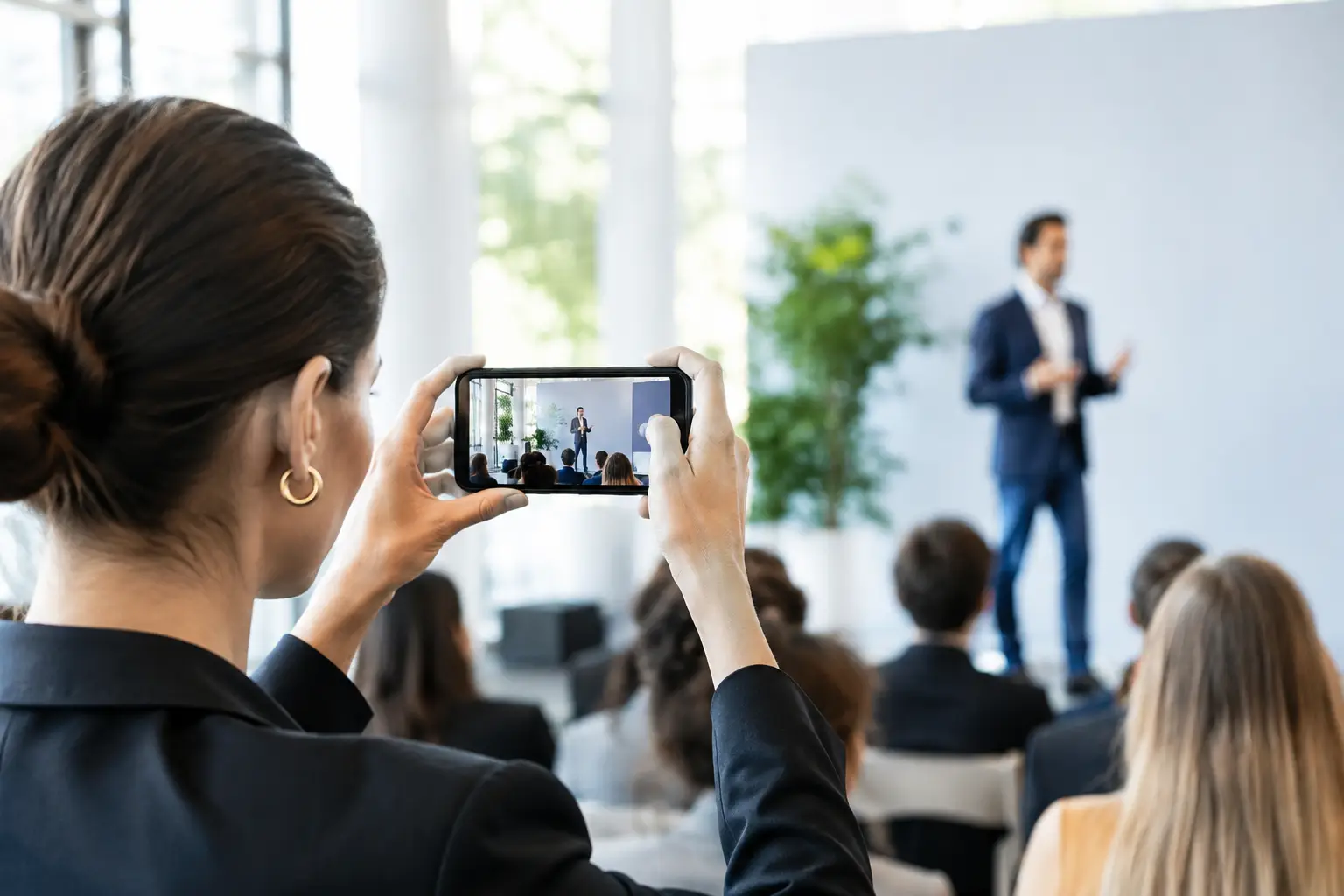
For social content, leave room for vertical framing. Guests naturally capture and share in portrait orientation, and short-form video platforms reward movement and immediacy. Plan a few intentional vertical-friendly moments, but do not neglect polished horizontal imagery for press materials, websites, internal communications, and post-event reporting.
Treat Lighting as Part of the Guest Experience
Lighting decides whether an event feels cinematic, clinical, intimate, or energetic. It also decides whether photography and video can faithfully represent the investment made in the space.
Before finalizing the production plan, review the venue’s existing light conditions. Ballrooms with warm ambient fixtures may photograph beautifully until colored uplighting overwhelms skin tones. A daylight-filled venue can shift dramatically as the sun sets. Projection-heavy programs may require photographers and videographers to balance low light with the need to preserve screen content.
Professional teams can adapt, but early coordination produces better results. Ask how booth lighting, photographer lighting, stage wash, and ambient design will work together. A polished photo booth should flatter guests consistently, even when the room itself is dark. Likewise, a keynote stage should support both the audience experience and clear coverage of speakers.
Assign Ownership Before Event Day
Visual storytelling often breaks down in the handoffs. The marketing team assumes the agency has approved the brand assets. The agency assumes the venue has confirmed power and placement. The venue assumes the production crew has a load-in contact. Details that feel small can affect the quality of the final experience.
Create a simple production alignment document with the event timeline, contact list, floor plan, branding files, priority captures, approval process, and delivery expectations. Confirm where the photo booth or video activation will live, what sightlines it needs, and whether the placement supports natural traffic flow. A hidden activation rarely delivers the guest participation it deserves.
Professional attendants also matter. They set the pace, welcome guests, troubleshoot with discretion, and help the experience feel considered from the first interaction through the final capture. For luxury events, that level of hospitality is part of the visual story.
Capture the Afterlife of the Event
The event itself may last a few hours. Its content can support a campaign, sales outreach, recruiting effort, social calendar, sponsor recap, or personal memory for much longer. Plan for that afterlife before the doors open.
Determine who needs images quickly, which assets require approval, and whether a next-day highlight reel has real value for attendees or stakeholders. A full gallery is valuable, but a curated selection of high-impact images is often more immediately useful to a marketing team. If you are gathering guest-generated content, consider how branded digital delivery will encourage guests to access, save, and share their images.
At Pic Station, the goal is not simply to put a camera in the room. It is to create a distinctive visual experience that guests want to enter and a content collection organizers are proud to use long after the last toast, keynote, or dance set.
When planning your next event, choose the moments you want people to remember before you choose what to photograph. The right visual story gives every polished detail, genuine reaction, and celebratory frame a lasting purpose.