
05 Oct 360 Booth Versus DSLR Booth for Luxury Events
A 360 booth versus DSLR booth is not simply a choice between two ways to capture guests. It is a decision about the energy you want in the room, the kind of content your event needs to produce, and what guests should take away after the final toast, keynote, or product reveal. Both can be exceptional. They simply create different kinds of moments.
For a brand activation, conference, gala, or wedding, the strongest choice is usually the one that matches the event’s pace and visual goals. A 360 booth creates movement, spectacle, and short-form video content. A DSLR booth creates polished portraits, tangible keepsakes, and a refined editorial look. The right format depends on what you want guests to do, share, and remember.
360 Booth Versus DSLR Booth: The Core Difference
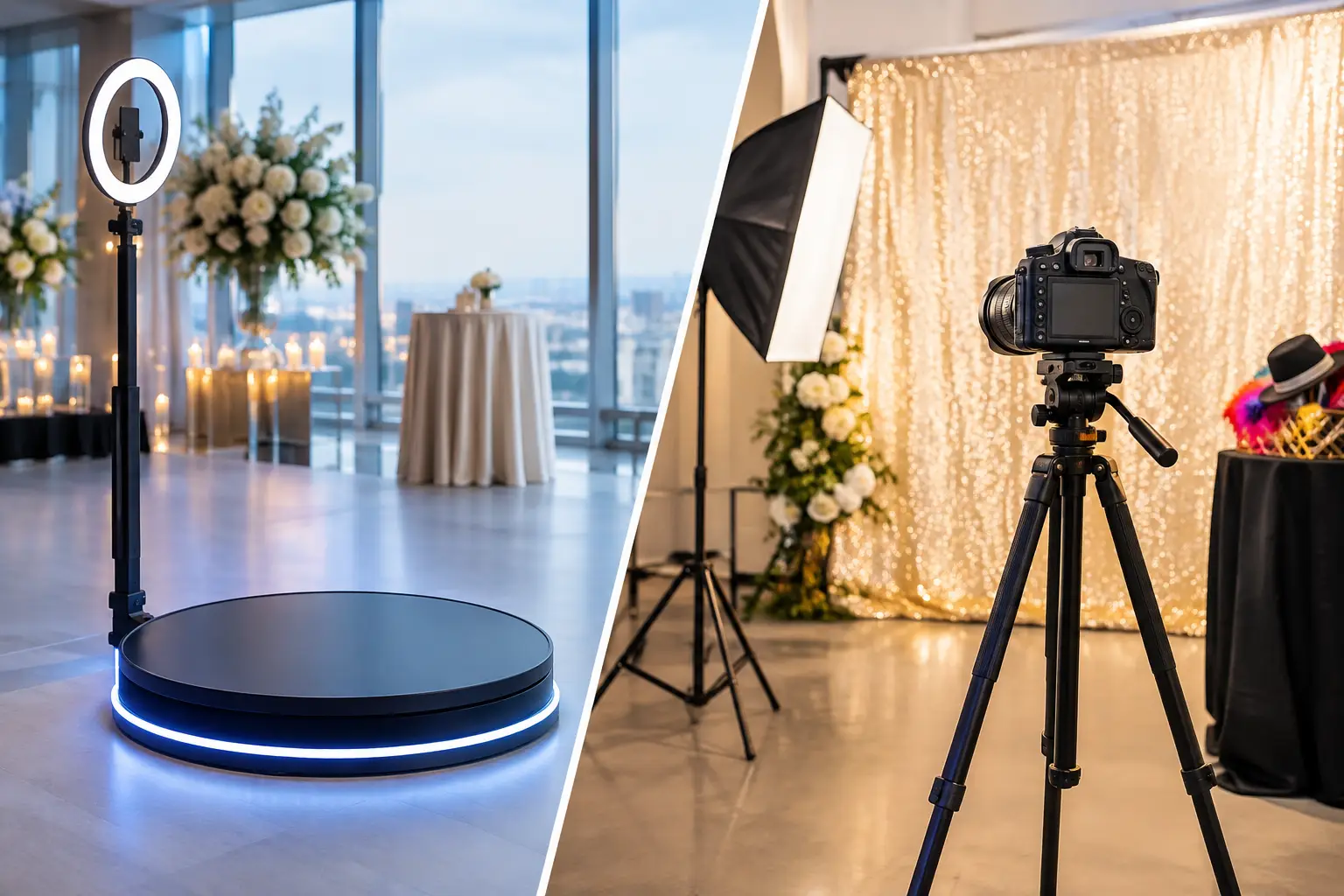
A 360 booth places guests on a platform while a camera moves around them, capturing a cinematic video from every angle. The finished clip is typically enhanced with slow motion, music, overlays, effects, and event-specific branding. It is made for motion and immediate social sharing.
A DSLR photo booth uses a professional camera, intentional lighting, and a composed setup to produce high-resolution still images. Guests step into a designed photo moment rather than a moving production. Depending on the experience, they may receive digital galleries, branded templates, printouts, GIFs, or a mix of formats. The defining advantage is image quality and consistency.
Neither option is inherently more premium. The premium result comes from thoughtful production: a beautiful footprint, flattering light, custom creative, well-trained attendants, and an experience that belongs naturally within the event environment.
Choose a 360 Booth When Energy Is the Main Event
A 360 booth is often the better fit when the goal is to create a visible attraction. Guests notice the movement, gather around to watch, and begin thinking about how they want to perform for the camera. That built-in anticipation can be especially valuable at brand activations, employee celebrations, launch parties, nightlife-forward events, and large-scale receptions.
The format works best when guests have room to move. A spin, a group pose, a toast, a dramatic entrance, confetti, props, or a branded product moment can all become part of the clip. Rather than documenting a single expression, the booth captures personality in action.
For marketing teams, 360 content has a clear advantage: it is naturally aligned with short-form social video. A branded overlay, campaign graphic, custom soundtrack, or visual effect can turn each guest video into a piece of shareable event content. When the activation is designed well, the booth is more than entertainment. It becomes a content engine that extends the event beyond the venue.
There are practical considerations. A 360 booth needs a footprint that allows for the platform, camera arm, attendant area, and a safe guest queue. The experience also moves at a different pace than a traditional photo booth, particularly when guests need direction on how to pose or enter the platform. For an intimate dinner or a tightly scheduled conference break, that may not be the ideal rhythm.
Where 360 Booths Shine
A 360 booth earns its place when the event benefits from visible momentum. Think a product launch with a bold campaign look, a sponsor lounge at a conference, a high-energy gala after-party, or a wedding reception where the dance floor is already full. It is particularly effective when the visual concept includes motion, such as metallic fringe, florals in motion, custom props, fashion-forward styling, or dramatic lighting.
It can also create a strong focal point in a larger room. At expansive venues in Nashville, Los Angeles, or New York City, an immersive video activation gives guests a clear reason to explore a branded area instead of simply passing through it.
Choose a DSLR Booth for Polished, Lasting Portraits
A DSLR booth is built for a different kind of impact. It slows the interaction just enough for guests to settle into the frame, connect with the people beside them, and leave with an image that feels intentional. The result can resemble a magazine-style event portrait rather than a casual snapshot.
This makes DSLR booths a natural choice for weddings, galas, client dinners, awards events, and brand experiences where the visual standard needs to feel elevated. High-quality camera equipment and carefully controlled lighting matter most in challenging environments, including dim ballrooms, evening receptions, and venues with mixed lighting. A professional setup helps preserve flattering skin tones, sharp details, and a consistent finish across every image.
For hosts, the appeal is longevity. A well-composed still image has a different shelf life than a fast-moving social clip. Guests may share it immediately, but they are also likely to save it, print it, use it as a profile photo, or revisit it long after the event. For a wedding couple, that can mean hundreds of candid-yet-polished guest portraits. For a corporate team, it can mean a gallery of genuinely usable event imagery.
Where DSLR Booths Shine
Choose a DSLR booth when your event calls for an editorial aesthetic, a refined keepsake, or a flexible format that works across age groups and event styles. It is especially well suited to events with a sophisticated dress code, custom backdrops, floral installations, branded step-and-repeat moments, or a guest list that values a relaxed, camera-ready portrait.
It is also the more adaptable option for events where space is limited. A thoughtfully designed booth can have a strong presence without requiring the open operating area of a 360 platform. That flexibility matters in private dining rooms, conference corridors, cocktail spaces, and historic venues where every square foot has a purpose.
Consider the Guest Experience, Not Just the Output
The most useful question is not, “Which booth is more impressive?” It is, “How do we want guests to participate?” A 360 booth asks guests to perform. A DSLR booth invites them to pose.
That distinction affects turnout. Outgoing guests may flock to a 360 booth, especially once they see a few finished videos. Others may prefer the familiar confidence of standing with friends for a portrait. At an event with a broad guest mix, from executives to families to VIP clients, a DSLR booth often creates a more universally comfortable experience.
On the other hand, if the event’s purpose is to generate excitement and foot traffic, the theatrical quality of a 360 activation can be a strategic advantage. It gives attendees something to watch before they even participate. The booth becomes part of the room’s entertainment rather than a quiet corner for photos.
Branding and Customization Change the Equation
Both formats can carry a brand beautifully, but they do it differently. With a 360 booth, branding can appear in video overlays, animated graphics, digital frames, music selections, props, and the physical environment around the platform. It can feel dynamic, campaign-led, and designed for distribution.
With a DSLR booth, branding can live in the backdrop, print layout, digital delivery screen, custom interface, gallery presentation, and prop styling. The brand becomes part of a portrait guests want to keep, rather than an interruption placed over the image. For luxury brands, professional services firms, and formal corporate events, this restrained approach can be particularly effective.
Customization should always begin with the event’s visual language. A clean, minimalist conference identity may call for an elegant DSLR portrait station. A bold consumer campaign may benefit from kinetic video, animated effects, and a set that encourages guests to step into the story. The technology should support the creative direction, not dictate it.
A Practical Decision for Event Planners
If your priority is high-energy video, social sharing, and a centerpiece that draws a crowd, choose a 360 booth. If your priority is sophisticated photography, timeless keepsakes, and consistently flattering guest portraits, choose a DSLR booth.
For some large programs, the most complete solution is not an either-or decision. A 360 booth can serve as the high-impact spectacle, while a DSLR booth gives guests a polished portrait option throughout the event. That combination is especially compelling when a brand needs social momentum and a lasting visual archive.
The final choice should reflect the atmosphere you are building. When the booth design, custom creative, professional staffing, and event flow are handled with precision, either format can make guests feel seen, celebrated, and eager to share the experience.