
09 Aug Corporate Interview Video Production That Performs
A well-framed executive interview can do more than fill a content calendar. It can give a company a credible voice, put real expertise behind a campaign, and turn a conference, announcement, or milestone into visual content with a long shelf life. Corporate interview video production is where that value is either built carefully or lost to flat lighting, rushed answers, and footage that never feels aligned with the brand.
For corporate teams, the goal is rarely just to record someone talking. The goal is to create a polished, cinematic asset that feels clear, confident, and human – whether it appears on an event screen, a landing page, a recruiting campaign, an internal channel, or social media.
What Makes a Corporate Interview Video Feel Premium
An interview video earns attention when it feels intentional from the first frame. Viewers may not name the details, but they recognize the difference between a webcam-style recording and a professionally produced conversation. Clean audio, flattering light, considered composition, and a composed subject all signal that the message matters.
The setting should support the story without competing with it. For an executive perspective, that may mean a refined office environment, a quiet lounge at a conference venue, or a branded set designed around a campaign’s visual direction. For a customer or employee story, the strongest location may be the place where the work happens. The right choice depends on the message, the audience, and how much of the company’s personality should appear on screen.
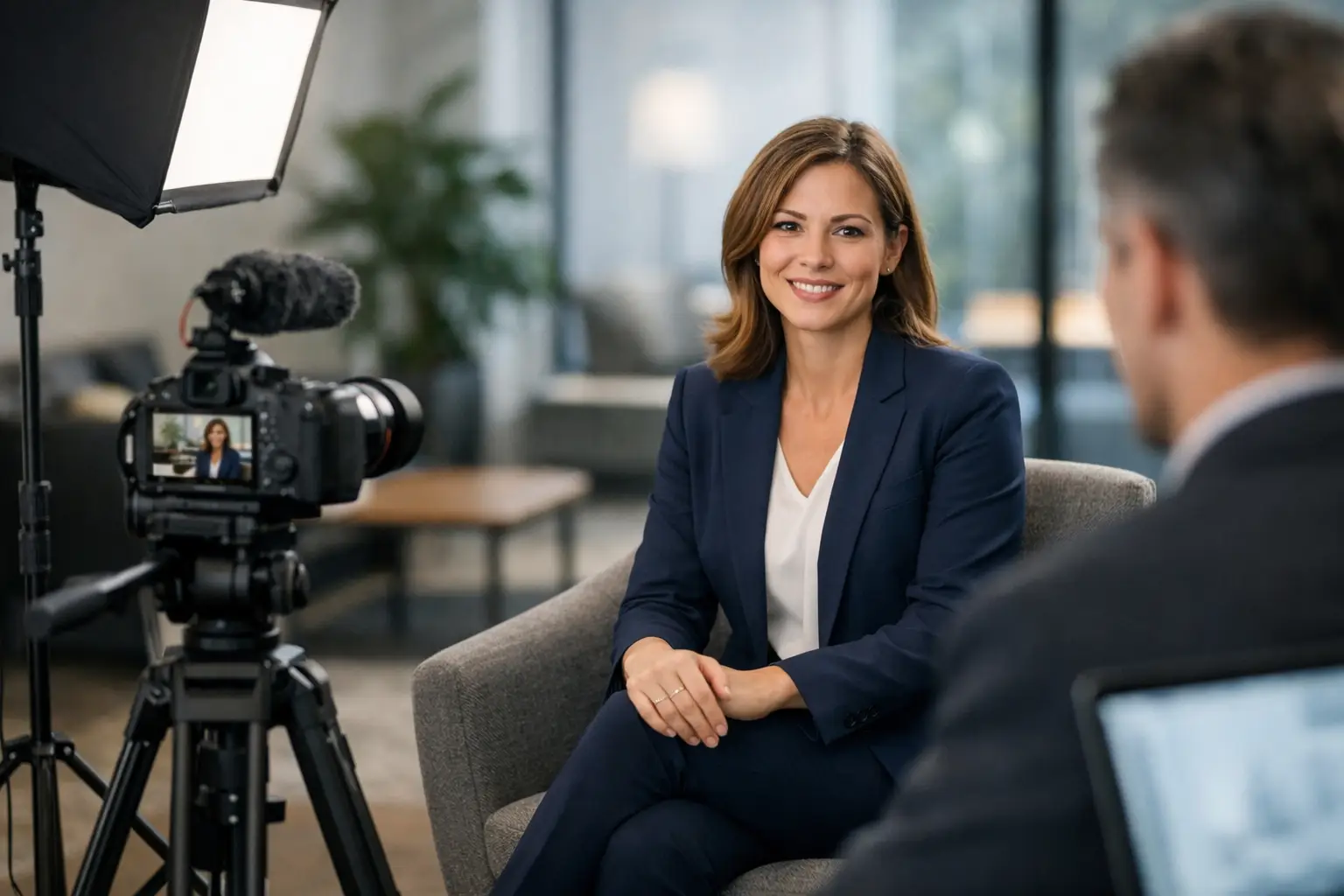
Production quality also protects the speaker. Few people are naturally comfortable on camera, particularly when they are balancing a busy event schedule or representing the organization at a high-visibility moment. A professional crew creates a calm, organized environment, guides the conversation without making it feel scripted, and handles the technical details so the person being interviewed can focus on what they know best.
Start With the Outcome, Not the Camera Setup
Before selecting a backdrop or drafting questions, decide what the finished video needs to accomplish. A corporate interview created for recruitment has a different rhythm from one designed to introduce a new product. A CEO message for an annual meeting needs a different level of formality than a fast-paced customer testimonial for a brand activation.
This decision shapes everything that follows: who should be interviewed, what questions will reveal useful insight, how long the final edit should be, and where the content will live. A thoughtful plan also prevents the common mistake of capturing one long interview and hoping it can later serve every purpose.
For example, a conference organizer may want short, energetic interviews with speakers, sponsors, and attendees. Those clips can become same-day social content, a post-event recap, and future event promotion. A corporate communications team may instead need a more composed interview with leadership, supported by branded motion graphics and workplace footage. Both are valuable, but they require different production choices.
Choose a Subject With Perspective
The most effective subject is not always the most senior person in the room. Authority matters, but specificity matters more. The ideal interviewee can speak in clear, direct terms about a challenge, decision, outcome, or point of view that the audience genuinely cares about.
An executive can explain the company’s vision. A project lead can explain how that vision becomes real. A client or partner can provide outside validation. An employee can make the culture feel tangible. When several viewpoints are available, a series of concise interviews often creates a more dimensional story than one extended monologue.
Write Questions That Invite a Story
Questions should encourage complete, conversational responses rather than yes-or-no answers. Instead of asking, “Did the event meet expectations?” ask, “What did you want attendees to experience when they entered the room?” That phrasing gives the speaker a place to begin and gives the editor a response that can stand on its own.
A strong interview plan usually moves from context to insight to proof. What challenge or opportunity existed? What did the team do? What changed as a result? That simple progression creates useful narrative structure without forcing a speaker into a rigid script.
It also helps to ask interviewees to repeat key context in their answers. If an executive says, “It changed everything,” the statement may sound powerful in the room but become unclear once the question is removed in the edit. A little direction during the interview saves significant time later.
The Details That Shape Corporate Interview Video Production
Audio is often the difference between content that feels authoritative and content viewers abandon. An elegant visual cannot compensate for echo, HVAC noise, nearby ballroom activity, or a microphone that has not been monitored. For event-based interviews, the team should assess the room before the schedule is locked, not after guests have arrived.
Lighting deserves the same level of attention. Natural window light can look beautiful, but it changes quickly and can be difficult to control. A professionally lit setup keeps skin tones flattering, maintains visual consistency across multiple speakers, and creates separation between the subject and the background. The result feels editorial rather than accidental.
Composition should reflect the brand. A tight, intimate frame can feel personal and direct. A wider frame can incorporate architecture, event design, product displays, or purposeful branding. There is no universally correct approach. The visual language should match the audience and the message rather than follow a generic corporate template.
For high-value interviews, a second camera angle is especially useful. It adds visual momentum, provides a natural way to refine pauses and stumbles, and gives the final piece a more elevated finish. B-roll is equally important. Footage of the event environment, team interactions, products, speakers, or guest engagement turns an interview from a talking head into a complete visual story.
Make the Interview Work Beyond One Moment
The strongest video investment is designed for more than a single premiere. A three-minute leadership story may become a 30-second social cut, a short quote for an event recap, an excerpt for an internal presentation, and a visual asset for next year’s campaign. Planning these versions early helps the production team capture the right framing, sound bites, and supporting footage.
This does not mean every interview needs to be cut into dozens of pieces. Over-editing can dilute a thoughtful message. It means deciding which formats are genuinely useful and building the shoot around them. A vertical social clip, for instance, may need a different composition than a widescreen video intended for a conference display.
Brand alignment should continue through the edit. Typography, color treatment, music, captions, lower-thirds, and pacing all contribute to the final impression. A polished video should feel connected to the broader campaign or event experience, not like an unrelated piece of content created after the fact.
A Better Experience for Speakers and Event Teams
At a conference or live brand event, production has to respect the schedule. Interview windows are often short, speakers may be pulled in multiple directions, and venues can change in an instant. The best approach is structured without feeling disruptive: a prepared set, a clear run of show, professional direction, and a crew that can adapt when timing shifts.
This is where an experienced event-production partner brings real value. Pic Station approaches visual coverage with the same attention to presentation, guest experience, and on-site execution that defines a high-end activation. The aim is not simply to collect footage, but to create a distinctive asset while keeping the process composed for every person involved.
For planners, that means fewer last-minute questions and a more reliable result. For marketing teams, it means content that looks intentional from the first frame. For interview subjects, it means being guided through the process with confidence and respect for their time.
When an Interview Is the Right Choice
Corporate interviews are especially effective when a brand needs trust, clarity, or a human point of view. They work beautifully for leadership communications, employee stories, client testimonials, thought-leadership campaigns, award recognition, post-event recaps, and recruiting content. They are also powerful additions to product launches and experiential activations when the audience needs context beyond the visual spectacle.
That said, an interview should not carry every video on its own. If the story is primarily about atmosphere, movement, or guest interaction, a cinematic event recap may do more of the work. If the goal is a direct announcement, a concise scripted message may be more efficient. The best campaigns often combine formats: interview footage for meaning, b-roll for energy, and branded design for cohesion.
A compelling corporate interview does not need a dramatic script or a celebrity spokesperson. It needs a clear point of view, thoughtful production, and enough visual care to make the audience pause and listen. Give the right person a prepared space to speak, and the message can keep representing your brand long after the room has cleared.