


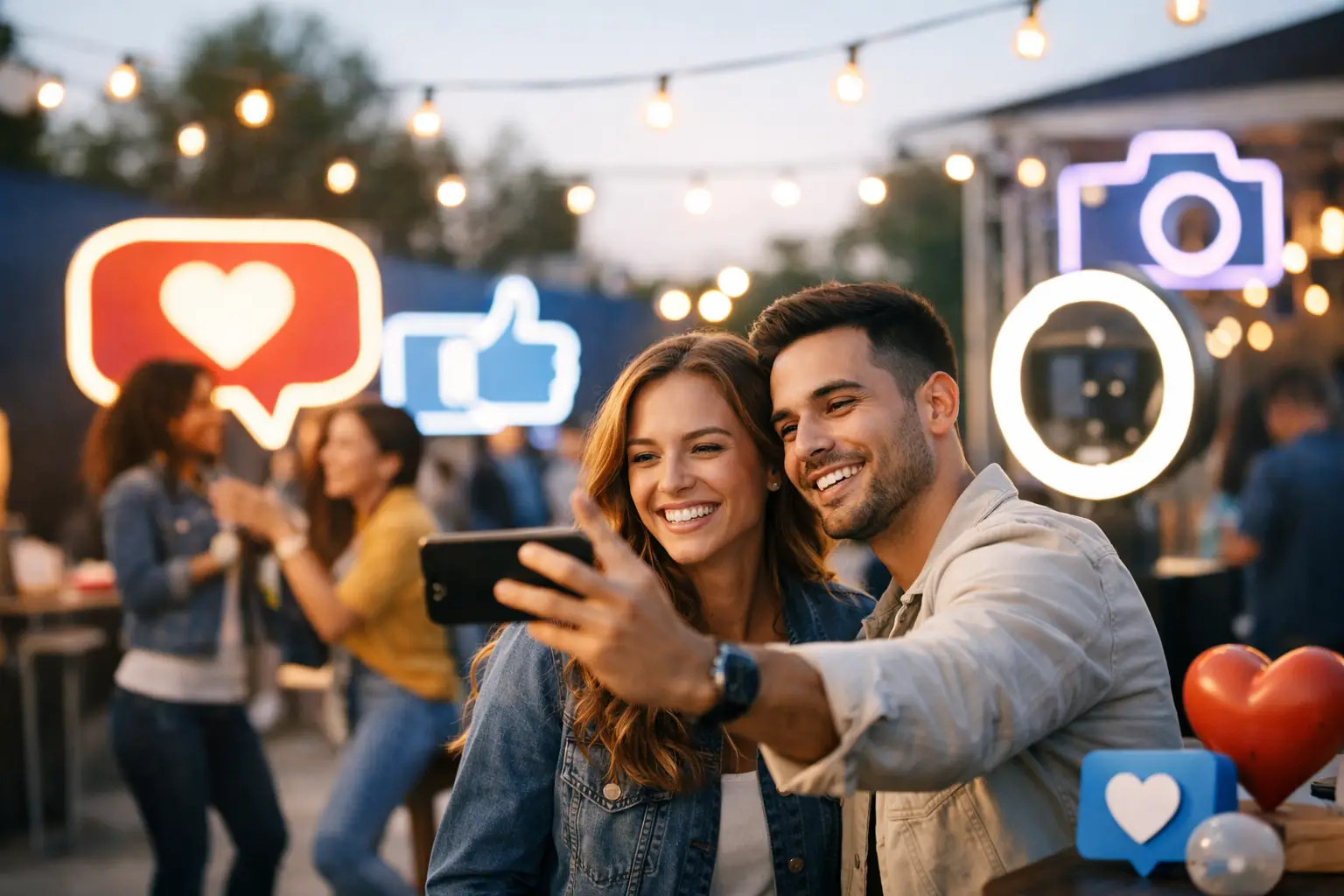
06 Aug Social Media Event Activation That Gets Shared
A guest pauses beneath a custom installation, steps into perfect light, captures a striking clip, and shares it before leaving the room. That is the opportunity behind a thoughtful social media event activation: not simply documenting attendance, but creating a visual moment compelling enough to travel beyond the venue.
For brand teams and event planners, the goal is not to ask guests to post more. It is to give them something worth posting. The difference is significant. A generic photo opportunity can fill a quiet corner of an event. A polished, intentional activation can turn guest participation into branded content, real-time social proof, and a stronger memory of the occasion.
What Makes a Social Media Event Activation Work?
The strongest activations connect three experiences at once: the guest experience in the room, the content experience on a phone, and the brand experience seen by everyone who encounters that content later. If one of those elements feels neglected, sharing becomes less likely.
The in-person moment has to feel inviting. Guests should understand what to do without a lengthy explanation, whether that means posing inside a photo booth, moving through a 360 video booth experience, answering a playful prompt, or interacting with a scenic installation. The visual result must also look elevated enough to earn a place on a guest’s feed, not just their camera roll.
Finally, the brand needs to be present with restraint. A logo, color palette, campaign line, or custom overlay can make the content distinctly yours. But when branding overwhelms the image, guests may feel they are distributing an ad rather than sharing a moment they genuinely enjoyed. The best balance makes the brand recognizable while keeping the guest at the center of the frame.
Start With the Content You Want Guests to Create
Before selecting technology or designing a backdrop, define the content outcome. A product launch may call for short, cinematic movement that highlights a new item or campaign world. A conference may benefit from crisp branded portraits that make attendees feel recognized and polished. A gala often calls for editorial-quality photos that reflect the formality and energy of the evening.
This decision shapes everything from the footprint of the activation to the staff required to operate it. It also prevents a common planning mistake: choosing an attraction first, then trying to force a social strategy around it.
Ask what you want a post to communicate at a glance. It might be excitement around a launch, the scale of a corporate celebration, the personality of a team, or the distinctive atmosphere of a wedding weekend. Then consider where the asset will live. Vertical video is particularly useful for Stories, Reels, and short-form social channels, while high-resolution still imagery can serve guest sharing, post-event recaps, PR use, and future marketing.
There is no single ideal format. A 360 video booth can create high-energy motion and dramatic replay, while a DSLR-powered photo booth may be the better choice when clean lighting, flattering portraits, and a refined aesthetic matter most. The right choice depends on your audience, venue, event pace, and visual objective.
Design for Participation, Not Just Visibility
An activation can be visually impressive and still underperform if guests are unsure when or how to engage. Visibility matters, but participation is the measure that counts.
Place the experience where it can be discovered naturally without creating congestion. Near a cocktail area, reception entrance, sponsor lounge, or event transition point often works well. The activation should feel like part of the event flow, not an isolated obligation guests must seek out. At a conference, it may perform best near a break area; at a private celebration, it may become most active once music and conversation have built momentum.
Professional attendants make an outsized difference here. They welcome guests, demonstrate the experience, keep the line moving, and encourage group participation without making anyone feel pressured. Their presence also protects the premium feel of the installation. A high-end visual experience should not leave guests troubleshooting screens, rearranging props, or guessing where to stand.
Creative direction matters just as much. A backdrop needs visual depth, thoughtful lighting, and enough contrast for a phone screen. A simple branded step-and-repeat can work for red-carpet arrivals, but it rarely creates the same desire to share as an immersive set, a custom editorial portrait environment, or an interactive video moment designed around the event theme.
Make Sharing Easy at the Point of Excitement
Guests are most likely to share immediately after they see a result they love. That is why delivery should be fast and uncomplicated. A clear digital-sharing experience, customized gallery, or QR-based delivery option lets guests save and post while the energy is still high.
The asset itself should be optimized for the channel. Vertical framing is usually the most flexible for social video, while images should retain enough quality for guests who want to post, print, or use them beyond a single story. Branded overlays and motion graphics should complement the content rather than crowd it.
It also helps to provide a natural social cue. A campaign hashtag, event handle, or concise callout can guide guests, but it should never be the only reason content gets posted. People share because the experience made them feel celebrated, entertained, included, or inspired. The hashtag simply makes those posts easier to find.
Build the Brand Into the Experience
Customization should feel intentional from the first glance. That can include the booth exterior, backdrop, lighting treatment, on-screen interface, photo template, animation, props, sharing screen, and post-event gallery. When these details work together, the activation feels like a custom production rather than an off-the-shelf rental placed in a branded room.
For corporate events, the visual language should align with the broader campaign. If the event uses bold geometric graphics, carry that direction into the frame design and motion assets. If the brand is known for understated luxury, choose restrained color, premium finishes, and clean portrait lighting rather than visual clutter. Consistency makes the content more useful to marketing teams after the event because it already belongs within the campaign world.
For weddings and private celebrations, the same principle applies in a more personal way. An activation can echo the invitation suite, florals, tablescape, destination, or dress code while still giving guests a lively reason to participate. The experience should feel personal to the hosts, not merely decorative.
Plan for the Content Beyond the Event
A successful social media event activation should continue producing value after the final guest leaves. Marketing teams can use standout images and clips in recap posts, internal communications, recruitment content, partner follow-ups, and future event promotion. The content feels more credible because it captures genuine guest response rather than a staged campaign shoot.
That requires a plan for asset ownership and selection. Decide who will review the final gallery, what content can be reposted, and how the strongest assets will be organized for the team. If a photographer or videographer is also covering the event, align their shot list with the activation. The booth captures participation; event coverage captures the context, crowd energy, and environmental details that make that participation meaningful.
This combined approach is particularly effective for launches and experiential campaigns. The activation creates a repeatable guest-facing moment, while professional photo and video coverage records the broader story of the event. Together, they give the brand both immediate shareable assets and a deeper library of polished visuals.
Avoid the Common Activation Missteps
The most frequent issue is treating social sharing as a feature instead of an outcome. Adding a logo to a standard photo does not automatically create a shareable experience. Guests need a reason to stop, participate, and feel proud of the result.
Another misstep is underestimating the production details. Poor lighting, a cramped footprint, unclear guest flow, or a backdrop that photographs flat can diminish even a strong creative idea. Venue walkthroughs, power planning, setup timing, and precise staffing are not glamorous, but they protect the final guest experience.
Finally, do not measure success only by total impressions. A smaller number of high-quality posts from engaged guests can be more valuable than a large volume of forgettable content. Look at participation, shares, saves, branded-content quality, guest feedback, and the number of assets your team can use after the event.
A refined visual activation gives guests a reason to step into the story of your event. With the right creative direction, technology, and on-site execution, that story can feel just as distinctive on a phone screen as it did in the room. Pic Station approaches each experience with that balance in mind: polished imagery, purposeful customization, and professional support that lets planners focus on the celebration unfolding around them.