


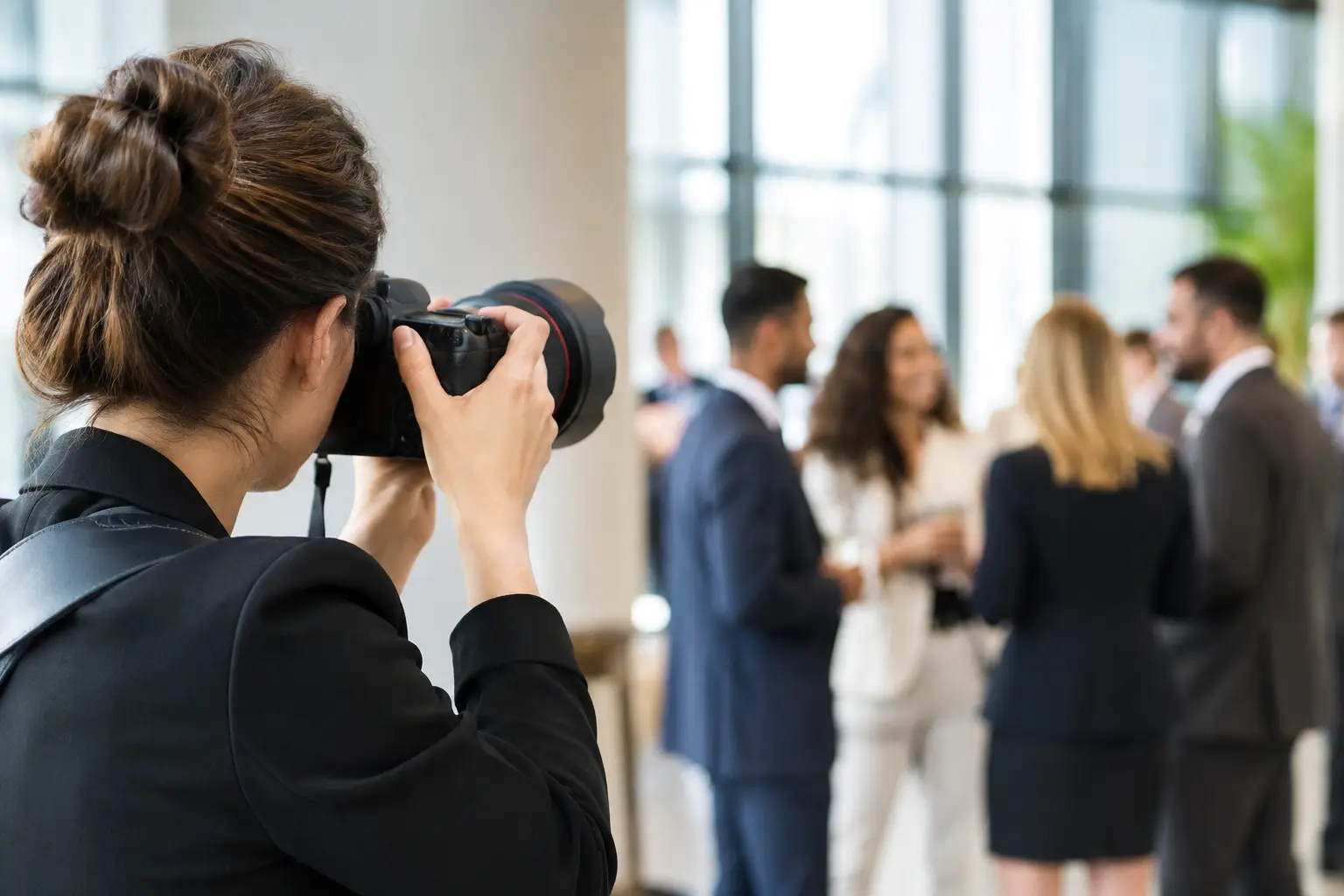
29 Sep Event Photography That Makes Every Moment Work
A packed ballroom, a product reveal, a standing ovation, a spontaneous laugh at the photo booth – these moments move quickly, but their value lasts far beyond the event itself. Exceptional event photography turns that energy into polished visual assets that guests want to share and brands can continue using long after the room is cleared.
For corporate teams, those images may support a campaign recap, employer brand content, sales materials, or next year’s event promotion. For a wedding or private celebration, they become the record of the people, details, and atmosphere that made the occasion personal. The difference is not simply having a camera in the room. It is having a visual team that understands what the event needs to communicate.
Event Photography Is Part of the Guest Experience
Photography is often treated as event documentation: capture the keynote, photograph the décor, get a few crowd shots, and deliver a gallery afterward. That baseline matters, but a high-end approach does more. It creates images with intention – images that feel as considered as the venue, guest list, stage design, and menu.
The best photographers know when to stay invisible and when to direct with confidence. During a conference session, the goal may be clean, flattering images of speakers that preserve the scale and focus of the room without interrupting the program. At a brand activation, it may mean recognizing the exact point when a guest interaction, custom installation, and branded message align in one frame. At a wedding, it means anticipating meaningful glances and family moments without turning the celebration into a series of posed interruptions.
That judgment is what makes photography feel effortless for hosts and guests. Professional coverage should support the rhythm of the event, not compete with it.
What a Strong Event Photo Collection Needs to Do
A polished gallery does not rely on one type of image. It balances the wide shots that establish the setting with the close details that reveal the care behind it. It captures the central program while also showing guests genuinely engaged with the experience.
For most events, the strongest collection includes four visual layers:
- Atmosphere: Venue exteriors, room reveals, lighting, décor, signage, florals, tablescapes, and other details that establish the event’s visual identity.
- People: Natural guest interactions, portraits, arrivals, networking, reactions, and the candid energy that proves the room felt alive.
- Programming: Keynotes, panels, toasts, performances, award presentations, launches, and other moments that define the schedule.
- Brand or celebration details: Custom installations, step-and-repeats, product moments, sponsor integrations, personalized stationery, and guest-facing activations.
The balance shifts depending on the assignment. A technology conference may prioritize leadership, packed sessions, sponsor visibility, and attendee connection. A luxury wedding may emphasize emotion, fashion-forward portraits, tablescape details, and the movement of the dance floor. A marketing activation needs clear evidence of participation and brand presence, but it still has to feel candid enough for social content.
A photographer who understands these priorities can make smarter decisions in real time, even when a timeline changes or an unscripted moment becomes the highlight of the night.
The Details That Separate Editorial Images From Basic Coverage
Every event has visual challenges. Ballrooms can be dim. Conference stages can create harsh mixed lighting. Product launches may involve reflective surfaces, LED screens, or rapid movement. A photographer’s technical skill determines whether these conditions become limitations or part of the visual character of the image.
Lighting is particularly important. Thoughtful flash technique can retain the mood of an evening reception while keeping skin tones natural and faces bright. It can capture an awards recipient at the podium without flattening the stage design behind them. For portraits and VIP images, a photographer may create a refined look quickly in a busy environment, using available light or a compact lighting setup that does not disrupt guest flow.
Composition matters just as much. Clean backgrounds, purposeful framing, flattering angles, and careful attention to distracting elements make an image feel editorial rather than incidental. This is especially relevant for events with custom branding. A logo should be visible when it needs to be, but it should not overwhelm every frame or feel forced into the story.
Post-production completes the standard. Consistent color, balanced exposure, and restrained retouching help a gallery feel cohesive. The objective is not to make an event look like something it was not. It is to present its best, most polished version with accuracy.
Event Photography Planning Starts Before Guests Arrive
The most successful coverage begins with a thoughtful pre-event conversation. A production team should understand the purpose of the gathering, the nonnegotiable moments, the visual priorities, and the ways the finished images will be used.
For a corporate event, that may include an executive shot list, sponsor requirements, priority attendees, product angles, and content needed for social channels. For a private event, it might include family groupings, heirloom details, ceremonial moments, and the traditions that matter most to the hosts. A concise plan creates clarity without making the day feel overproduced.
The timeline also deserves attention. If a room reveal is important, photography needs access before doors open. If leadership portraits are required, they need a protected window before speakers are pulled in different directions. If a photo booth or 360 video experience is part of the program, it should be positioned and styled to invite participation while fitting the event’s overall visual language.
There is a trade-off here: a highly detailed shot list can protect essential deliverables, but it can also become restrictive if it treats every image as a checklist item. The best plans identify priorities, then give the creative team room to respond to the real energy in the room.
Pair Photography With Interactive Content Moments
Professional photography captures the event from the outside looking in. Interactive photo and video experiences invite guests to become part of the content themselves. Together, they create a more complete record of the occasion.
A custom photo booth can provide instantly shareable portraits, branded overlays, and a polished guest keepsake. A 360 video booth brings movement, personality, and high-energy social content to an activation or celebration. These experiences are not substitutes for event coverage. They serve a different purpose: photographers document the event story, while guest-facing installations create an active reason for people to participate in it.
The visual connection between the two matters. A modern booth design, customized backdrop, on-brand digital template, and professional attendant can make the activation feel integrated rather than added at the last minute. For experiential campaigns, that cohesion helps every image reinforce the same brand world.
Choosing the Right Event Photography Partner
A strong portfolio is essential, but it should not be the only consideration. Event planners also need a team that can work within a live production environment: coordinating with venue staff, respecting security and VIP protocols, adapting to changing run-of-show details, and communicating clearly without adding pressure to an already full day.
Ask how the team approaches low-light spaces, keynotes, group portraits, branded deliverables, and fast-moving schedules. Review whether their work shows real events with varied conditions, not only carefully controlled portrait sessions. Look for consistency across a full gallery, because one exceptional image is not the same as reliable coverage throughout an event.
For events in Nashville and beyond, Pic Station approaches visual coverage as part of a broader guest experience – combining professional photography with high-end, customized photo and video activations when the event calls for both. The goal is always the same: create content that looks distinctive, feels true to the occasion, and gives organizers confidence from setup through final delivery.
The most valuable event images do more than prove an event happened. They let people revisit the feeling of being there, give brands evidence of meaningful engagement, and make the next invitation that much more compelling.