


04 Aug A Product Launch Photo Experience That Performs
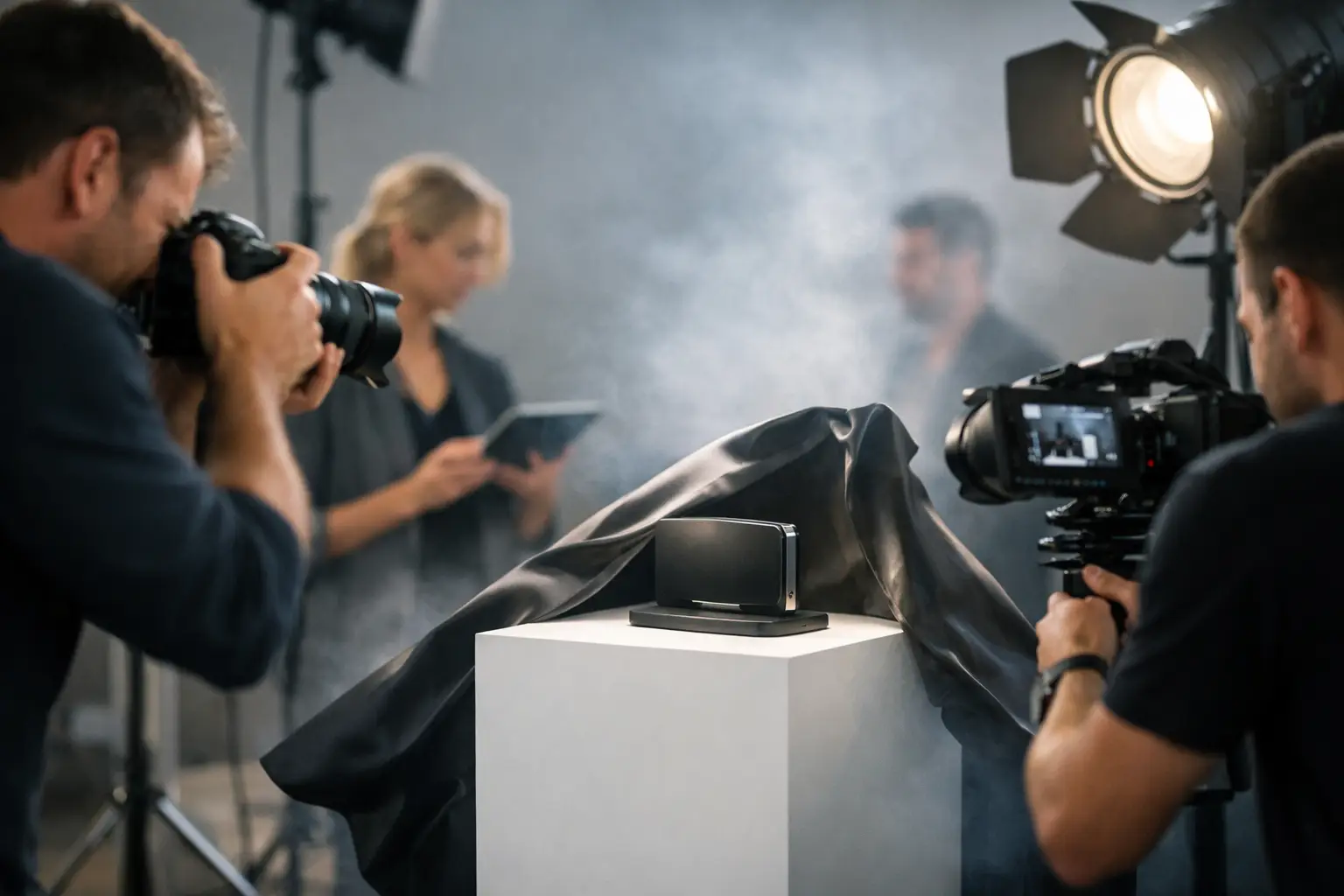
A product launch has a narrow window to make an impression. Guests need to understand what is new, why it matters, and why they should talk about it after they leave. A thoughtful product launch photo experience gives that momentum a visual home: a place where the product, the brand, and the audience meet in a way that feels polished, participatory, and ready to share.
The strongest launch activations do more than place a logo on a backdrop. They create a designed moment that draws people in, makes the product feel tangible, and produces editorial-quality content that supports the campaign long after the event floor clears.
Start With the Product Story, Not the Photo Booth
A photo experience should feel like an extension of the launch, not an entertaining add-on placed in a corner. Before selecting a booth format, backdrop, or camera treatment, define the product story guests should take away.
Is the launch built around performance, discovery, self-expression, innovation, or luxury? A beauty launch may call for flattering portrait lighting, an elevated glam station, and branded digital delivery. A technology release might benefit from an immersive 360 video booth, custom motion graphics, and a setting that reflects speed or future-forward design. A beverage or hospitality launch may be best served by an editorial photo moment built around the ritual of tasting, toasting, and gathering.
The key is choosing an interaction that makes sense for the product. When guests can see themselves within the brand world, the imagery becomes more believable and more useful. They are not simply posing beside a campaign message. They are participating in it.
Ask What the Guest Gets to Do
The most effective activations give attendees a clear reason to step in. They may test a product feature, choose a visual effect, record a reaction, or pose within a cinematic set. That action can be simple, but it needs to be intuitive from several feet away.
For busy launch events, avoid an experience that requires a lengthy explanation or a complicated series of choices. For a smaller VIP reveal, a more guided portrait moment can feel intentional and exclusive. The right approach depends on guest volume, event timing, and whether the priority is broad participation or a more considered content capture.
Design the Product Launch Photo Experience Around Content
Brand teams often plan for launch-night photos, then discover too late that they needed content in several formats. A high-end photo experience should be designed with the full content ecosystem in mind: social posts, press recaps, executive reporting, email follow-ups, internal communications, and future campaign use.
That begins with the visual direction. Custom backdrops, step-and-repeats, scenic installations, and branded interfaces should all reflect the campaign’s color palette, typography, and level of polish. But branding should not overwhelm the image. If the logo is the only thing guests see, the result can feel promotional rather than aspirational.
Instead, create layers. A subtle branded set can establish the environment, while digital overlays, animated frames, and custom photo templates provide a more direct brand cue. This gives guests an image they want to keep while ensuring the launch remains recognizable when the content is shared beyond the room.
Build for Both Portrait and Motion
Still imagery is essential for polished guest portraits, press-ready moments, and traditional event documentation. Motion content adds energy, especially when the product launch is intended to travel across social channels. Boomerangs, GIFs, 360 video, slow-motion capture, and short-form branded clips can turn a single activation into a steady stream of dynamic assets.
There is a trade-off. More formats can create more content, but too many options can slow the guest journey and dilute the visual identity. A focused combination usually performs best. For example, a DSLR-powered photo booth can capture refined portraits while a nearby 360 video booth creates high-energy motion for key guests, influencers, or scheduled moments in the program.
Lighting matters just as much as format. Dim launch venues, dramatic scenic builds, and high-gloss product surfaces require deliberate lighting design. Professional camera equipment and experienced attendants help preserve skin tones, manage reflections, and keep every image consistent with the standard of the brand.
Make the Installation Part of the Event Landscape
Placement can determine whether an activation becomes a destination or goes unnoticed. The photo experience should be visible from key traffic paths without creating congestion at registration, the bar, product demo areas, or the stage entrance.
Consider when guests will be most likely to participate. At a standing reception, a striking installation near the central flow may keep energy high throughout the evening. At a presentation-driven launch, guests may need a clear invitation to engage before doors open or immediately after the reveal. For a multi-day conference launch, the experience should be easy to access between sessions and durable enough to maintain its appearance through continuous use.
The physical footprint should also reflect the event’s design language. A modern open-air booth can feel clean and architectural in a premium showroom or hotel ballroom. A fully built set may be the better choice when the campaign calls for a stronger sense of place. A 360 platform creates its own visual draw, but it needs enough room for safe movement, a viewing perimeter, and an attendant-led flow.
This is where experienced production support becomes valuable. The best installations look effortless to guests because the logistical work has been handled in advance: power requirements, load-in timing, venue access, line management, lighting conditions, and contingency planning.
Give Guests a Reason to Share, Not Just a File
Digital delivery is expected. What makes content shareable is the feeling attached to it. A guest is more likely to post an image that makes them look confident, connected, or part of something distinct.
Small creative decisions have a large effect. A flattering angle, a composed background, a well-timed animated overlay, and an on-brand prompt can transform a quick capture into a post guests are proud to publish. If the product itself can appear naturally in the frame, even better. The image should communicate the launch story without asking guests to hold a package awkwardly or stand beneath oversized messaging.
For product-focused moments, consider a mix of candid event photography and guest-facing capture. Event photographers document the atmosphere, executive remarks, product reveals, and genuine audience reactions. The photo activation invites guests to create their own version of the story. Together, those assets provide both campaign polish and human proof that people showed up, engaged, and celebrated.
At Pic Station, this balance is built around premium equipment, tailored creative details, and professional on-site support. The result is not simply a collection of photos. It is an experience that gives the launch a recognizable visual signature.
Measure What a Great Experience Delivered
Success should not be defined only by the number of captures. Participation is useful, but it tells only part of the story. A high-performing launch activation can also be assessed by how well the content reflected the campaign, how consistently guests engaged, how often assets were shared, and whether the experience supported a larger business objective.
For a consumer launch, that objective may be reach, product awareness, or influencer content. For a B2B launch, it may be meaningful client interaction, lead capture, or giving prospects a memorable point of connection during a conference. For an internal reveal, the goal may be employee pride and a visual record of a milestone moment.
Set these priorities before the creative is finalized. If data capture matters, the consent and collection process should feel appropriate to the setting and clear to guests. If brand perception is the priority, protect the visual standard rather than chasing volume at every cost. If social sharing is central, test the delivery flow and make sure the content arrives quickly in a format that looks strong on mobile.
The Launch Moment Should Keep Working After the Room Empties
The best product launches create a feeling that lasts longer than the program. A distinctive photo experience turns that feeling into a collection of polished assets, personal memories, and visible proof of engagement.
When the creative concept, capture format, environment, and guest journey all support the same product story, the activation does more than document the event. It gives people a reason to remember the launch, talk about it, and carry its visual energy forward.