
30 Jul A Corporate Event Photo Booth That Performs
A ballroom can have flawless lighting, a strong keynote, and a packed agenda, yet still feel forgettable once guests leave. A corporate event photo booth changes that equation when it is treated as more than a corner attraction. It becomes a branded moment guests actively seek out, a reason to interact, and a source of polished visual content your team can use well beyond the event.
For planners and marketing teams, the standard should be higher than a tablet, a curtain, and a novelty prop box. The right activation needs to look at home within the event environment, reflect the brand with precision, and run confidently through a crowded schedule. It should make participation easy while producing imagery worth keeping.
What a Corporate Event Photo Booth Should Deliver
A high-end photo booth has two jobs at once. It needs to entertain guests in real time, and it needs to create a library of on-brand assets after the room clears. That dual purpose is why design, image quality, and staffing matter as much as the booth itself.
At a conference, the booth can give attendees a natural break between sessions and spark conversation among people who have not yet met. At a product launch, it can put a new campaign visual directly into guests’ hands. At an employee celebration or gala, it creates a shared experience that feels celebratory without feeling juvenile. The format may change, but the outcome remains consistent: more interaction, more memorable moments, and more content with a clear connection to the occasion.
A polished setup also protects the event’s visual standard. DSLR-quality imagery, flattering professional lighting, and a modern booth design communicate a very different level of care than a low-resolution snapshot. For brands that spend heavily on venues, catering, creative, and guest experience, this distinction is not cosmetic. Every photograph becomes part of what attendees remember and potentially share.
Start With the Moment You Want Guests to Have
The best photo booth concept begins with a simple question: what should guests feel when they step into the experience? A formal black-tie gala may call for editorial portraits against a refined custom backdrop. A tech conference might benefit from a sleek digital experience with animated overlays and immediate sharing. A marketing activation may need an immersive 360 video booth that makes the product, campaign colors, or creative world feel larger than life.
The answer should guide every choice, from backdrop materials to the style of prompts on screen. A booth that is visually disconnected from the event can still take photos, but it will not build the sense of occasion that a premium activation should create.
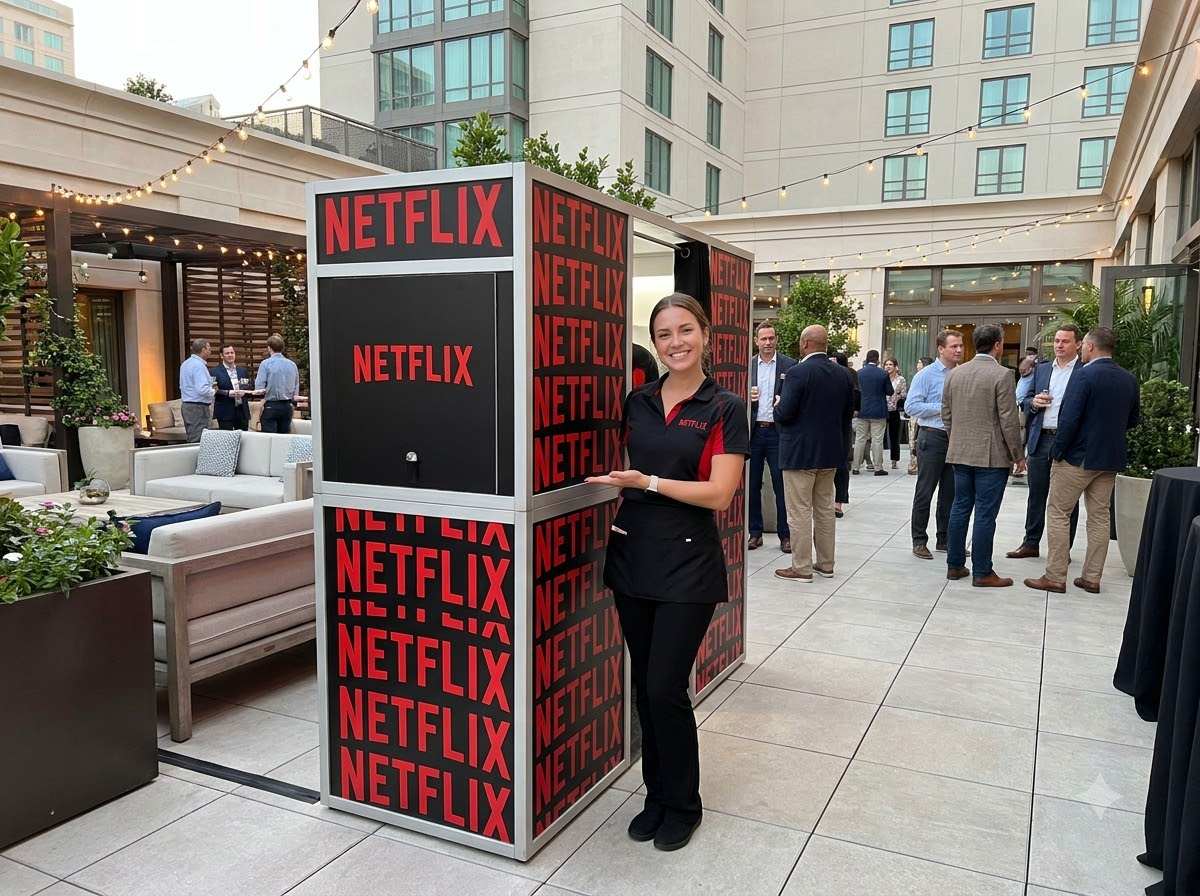
This is also where customization earns its value. A logo placed in the corner of a template is a starting point, not a complete branded experience. Thoughtful customization can include a campaign-specific backdrop, branded photo and video overlays, custom start screens, an intentional color palette, digital galleries, and share messaging that feels consistent with the brand voice. When each element works together, guests recognize the experience as part of the event rather than an add-on beside it.
There is a trade-off to consider. Heavy branding can be effective for a public-facing campaign, but too much can make guests less inclined to post or save their images. For internal events and elevated client gatherings, subtle branding often performs better. The event still receives visibility, while the content remains personal enough for guests to enjoy.
Choose a Format That Fits the Room
Not every corporate event needs the same photo booth. The venue footprint, guest count, event goals, and desired content should determine the activation rather than a default package.
An open-air photo booth is a strong choice for most conferences, receptions, and employee events because it accommodates individuals, teams, and larger group photos. Its clean presentation allows the backdrop to do more of the creative work, whether that means a step-and-repeat, a floral installation, a branded scenic wall, or a custom-built set.
A 360 video booth creates more movement and theater. It is especially effective for launches, nightlife-inspired celebrations, and experiential marketing moments where short-form video is central to the campaign. Guests receive an energetic, cinematic clip that is designed for sharing. It also needs adequate clearance, a well-managed guest queue, and an operator who can keep the experience moving without rushing participants.
For a gala or executive event, a portrait-focused setup may be the better fit. Studio-style lighting and a refined backdrop can deliver images that feel closer to editorial event photography than a traditional booth session. This option works well when the guest experience needs to feel sophisticated, discreet, and highly polished.
The practical details matter here. A compact space may favor an open-air booth over a large immersive installation. A three-hour cocktail reception has different throughput needs than an all-day trade show. If hundreds of attendees will participate in a short window, a single activation can create lines that discourage engagement. In that case, a second station, a faster capture flow, or a different event placement may be worth the investment.
Design for Participation, Not Just Appearance
A beautiful booth that guests cannot find or do not understand will underperform. Placement should support the natural movement of the event. Near a bar, reception entrance, sponsor lounge, or transition point can work well, as long as the booth does not block traffic or compete with key programming.
Visibility is useful, but the booth should not be placed directly beside a loud stage or in an area with harsh overhead light. Guests need room to gather, pose, review their images, and share without feeling like they are standing in a hallway. A professional production partner will assess power access, loading requirements, ceiling height, floor conditions, and the guest flow before installation begins.
The on-site attendant is equally important. Technology may make capture simple, but an experienced attendant turns a photo booth into a hosted experience. They invite participation without being intrusive, help groups move efficiently, troubleshoot in the moment, and maintain the visual presentation throughout the event. That hands-on execution is particularly valuable at corporate events, where the planner should be focused on the full program, not on whether the booth needs attention.
Make Sharing Useful to the Brand
Digital delivery is where a corporate photo booth can extend the event’s reach, but only if the sharing experience is intentional. Guests should be able to receive their images quickly through options that fit the audience and event format. From there, branded galleries and curated assets can support post-event recaps, social coverage, internal communications, and future marketing materials.
Before the event, decide what success looks like. Is the priority social sharing, email capture, sponsor visibility, employee participation, or simply a premium guest amenity? The answer affects the booth flow and the type of data, if any, collected. For a privacy-conscious audience, an easy gallery with minimal friction may be preferable. For a consumer brand activation, opt-in data capture and a clear campaign message may be central to the experience.
This should be handled with care. Data collection should never feel like the price of participation, and guests should understand what they are consenting to. A well-designed experience makes the exchange feel fair: guests receive a high-quality image or video they genuinely want, while the brand gains meaningful engagement rather than a list of reluctant contacts.
Build the Booth Into the Event Plan Early
The most effective activations are planned alongside the event creative, not squeezed into the final floor plan. Early planning gives the production team time to align the booth with the event identity, source or build the right backdrop, confirm venue logistics, and create a capture experience that feels distinctive.
It also gives marketing teams time to think beyond the event day. A branded content strategy may include an event hashtag, a recap gallery, a selection of hero images for social channels, or photography and videography coverage that captures the booth in action. Those surrounding assets show the energy of the room, not just the individual poses, and can make a single activation work harder across multiple channels.
At Pic Station, this is the difference between providing a rental and producing an experience. The booth, creative details, professional staffing, and visual quality are considered as one cohesive guest-facing moment. That level of coordination is especially valuable when the event is representing a major brand, hosting key clients, or bringing together a high-visibility audience.
A corporate event photo booth should leave guests with more than a file on their phone. Give them a moment that feels personal, well-produced, and unmistakably connected to the event they chose to attend. When that happens, the content follows naturally, and the memory has a reason to last.