
23 Oct Are 360 Booths Worth It at Your Next Event?
A 360 booth can turn a quiet corner of an event into the place guests line up, laugh, pose, and create content they want to share before the night is over. But are 360 booths worth it for every event? Not automatically. Their value comes down to whether the experience supports your event goals, your audience, and the level of production you want guests to remember.
For a corporate activation, a 360 video booth can create branded, social-ready content at scale. For a wedding or gala, it can add a cinematic moment that feels distinctly more elevated than a standard snapshot. The difference lies in the execution: a polished platform, intentional lighting, thoughtful overlays, a strong attendant team, and a setup that feels like part of the event design rather than an afterthought.
Are 360 Booths Worth It for Guest Engagement?
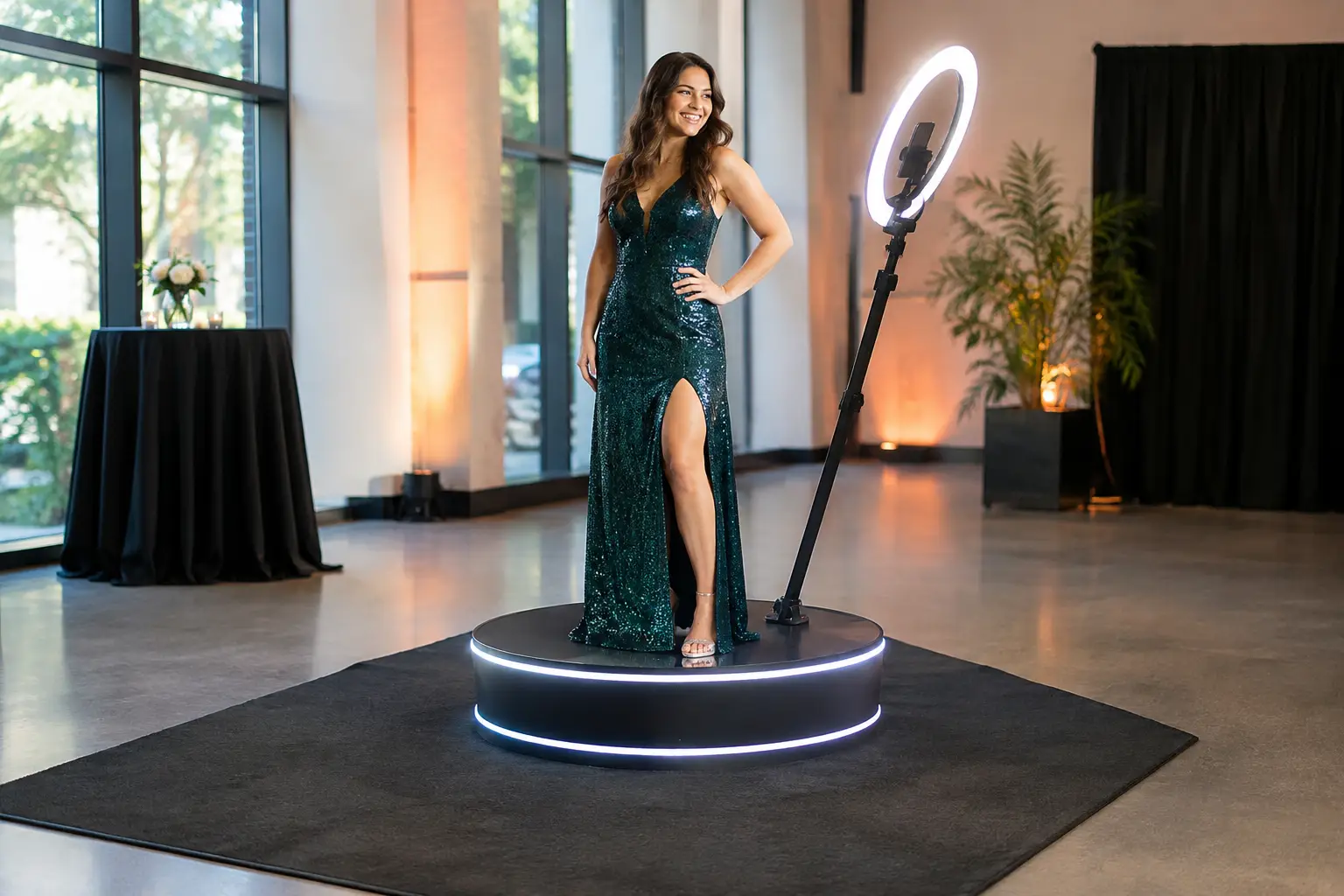
When the goal is to get guests participating, a 360 booth has a natural advantage. Instead of simply standing in front of a backdrop, guests step onto a platform while a camera rotates around them, capturing slow-motion movement from every angle. The result is energetic, flattering, and immediately watchable.
That movement changes the dynamic. Guests dance, toss props, show off a look, celebrate with colleagues, or recreate the energy of the dance floor. It gives people a reason to gather and a prompt for interaction, which is especially valuable at conferences, employee celebrations, product launches, and brand events where attendees may not know one another well.
The experience is also highly visible. A rotating camera and a group of guests celebrating on the platform create a sense of momentum that draws others in. Unlike entertainment that happens in one scheduled moment, a 360 booth can sustain engagement throughout a reception, after-party, networking event, or activation window.
Still, guest engagement depends on fit. A formal executive dinner with a tightly structured program may benefit more from refined event photography or an elegant portrait station. A 360 booth performs best when guests have time to enjoy it, music and energy support the moment, and the event allows for a little playfulness.
The Content Value Goes Beyond the Booth
The strongest case for a 360 booth is not simply that it is fun. It is that it produces a piece of branded or personal content guests actually want to keep.
A well-produced 360 video is designed for modern viewing behavior. Short-form clips feel at home in text messages, Instagram Stories, Reels, LinkedIn posts, and event recaps. Guests receive a memorable takeaway, while brands gain an organic stream of content that extends the activation beyond the venue.
For marketing teams, customization is where the experience becomes strategic. Video overlays, branded end cards, custom music, graphic treatments, themed props, and a designed environment can bring campaign elements into every shareable clip. Rather than asking attendees to photograph signage, the event itself becomes the content.
This is particularly effective when a brand has something visual to celebrate: a product reveal, a milestone, a conference theme, a seasonal campaign, or a high-profile partnership. The booth should not feel like a logo placed on top of a generic video. It should reflect the event’s visual identity with the same care given to staging, florals, signage, and presentation materials.
For private celebrations, the value is more emotional than promotional. A 360 booth captures the joy of a wedding party, the style of a birthday celebration, or the glamour of a gala in motion. Traditional photos preserve a beautiful expression. A cinematic clip preserves the atmosphere around it.
What Separates a Premium 360 Experience From a Basic Setup
Not all 360 booths deliver the same result. The format is simple to describe, but the visual outcome depends on production quality and event execution.
Lighting is one of the biggest variables. Without considered lighting, slow-motion video can look flat, harsh, or inconsistent. With the right setup, guests look polished, colors are intentional, and the finished clip feels worthy of sharing. The same applies to camera quality, stabilization, framing, and editing effects. A rotating video should look cinematic, not improvised.
The physical footprint matters, too. A 360 booth needs enough room for the platform, camera arm, lighting, attendant access, and an orderly guest line. At a crowded event, placement can make or break the experience. It should be visible enough to create energy without interrupting circulation, dinner service, presentations, or access to the dance floor.
Professional staffing is equally essential. Guests need clear direction, quick encouragement, and a confident host who can keep the line moving while maintaining the experience’s elevated feel. An experienced attendant knows when to suggest a pose, when to bring in a group, and how to protect the equipment while allowing guests to enjoy the moment.
At high-profile events, those details are not minor. They are the difference between a feature that looks impressive in the room and one that becomes a genuine highlight.
When a 360 Booth Makes the Most Sense
A 360 booth is especially well suited to events with an audience that values interaction, visual storytelling, and social sharing. It can be a strong choice for brand activations, company celebrations, conferences with a social component, launch parties, galas, weddings, and milestone birthdays.
It is also useful when the event needs a defined engagement zone. At large conferences, attendees often need reasons to step away from sessions and connect. At a brand event, guests may need a compelling reason to spend time in an activation space. At a wedding reception, guests may want an experience beyond dancing and conversation. A 360 booth gives them a shared activity with a built-in payoff.
The format works best when it is integrated into the event plan from the start. Consider the guest journey: When will attendees encounter it? What will encourage participation? How will the visual design connect to the larger event? What happens after they receive their video? Those answers shape whether the booth feels purposeful or simply present.
For a Nashville celebration with a strong music, fashion, or hospitality component, a 360 booth can feel especially at home. The key is matching the production style to the room, whether that means a sleek corporate installation, a bold branded environment, or a refined backdrop that complements a luxury wedding aesthetic.
When Another Experience May Be Better
A 360 booth is not the default answer for every event. If the primary goal is to create polished individual portraits, a DSLR photo booth or professional headshot station may be the better fit. Guests who want a timeless still image may prefer an editorial portrait over a short-form video clip.
Space constraints can also change the recommendation. The platform and rotating arm require thoughtful planning, and some venues or floor plans cannot accommodate the setup comfortably. In those cases, a compact photo experience can still deliver premium imagery without compromising guest flow.
Audience behavior matters as well. A reserved group may warm up more naturally to a portrait station, roaming photographer, or subtle GIF booth. A 360 experience is at its best when guests are open to movement and participation. It should invite confidence, not create pressure.
There is also the question of event pacing. If an activation lasts only a brief period or the program leaves little unscheduled time, guests may not have enough opportunity to participate. A successful booth needs visibility, staffing, and a realistic window for guests to engage.
How to Make the Experience Feel Worthwhile
If you choose a 360 booth, treat it as a designed event feature rather than a piece of equipment. Start with a clear purpose: guest entertainment, branded content, celebration, lead engagement, or social amplification. That purpose should inform the creative direction.
Next, give the experience visual presence. A custom backdrop, intentional set styling, branded graphics, or a themed environment can frame the content and make each clip feel connected to the occasion. Even minimal design can feel high-end when the details are cohesive.
Finally, protect the guest experience. Plan the footprint, locate the booth strategically, use professional lighting, and ensure an experienced team is managing the activation from setup through breakdown. Guests should feel the energy of the experience, not the logistics behind it.
A 360 booth is worth it when it creates more than a video. It should create a moment people talk about in the room, revisit afterward, and share because it captures the event at its most vibrant.