
07 Oct DSLR Booth Versus iPad Booth: Which Fits?
A photo booth can be the most photographed element at an event, or it can quietly become a missed opportunity. The choice between a DSLR booth versus iPad booth affects more than the camera itself. It shapes the visual standard of every gallery, the way guests engage, how branded content appears online, and how confidently the experience performs under real event conditions.
For planners, marketers, and hosts creating a high-end occasion, the right answer is rarely about choosing the newest technology. It is about matching the booth to the event’s lighting, creative direction, guest expectations, and post-event content goals.
DSLR Booth Versus iPad Booth: The Core Difference
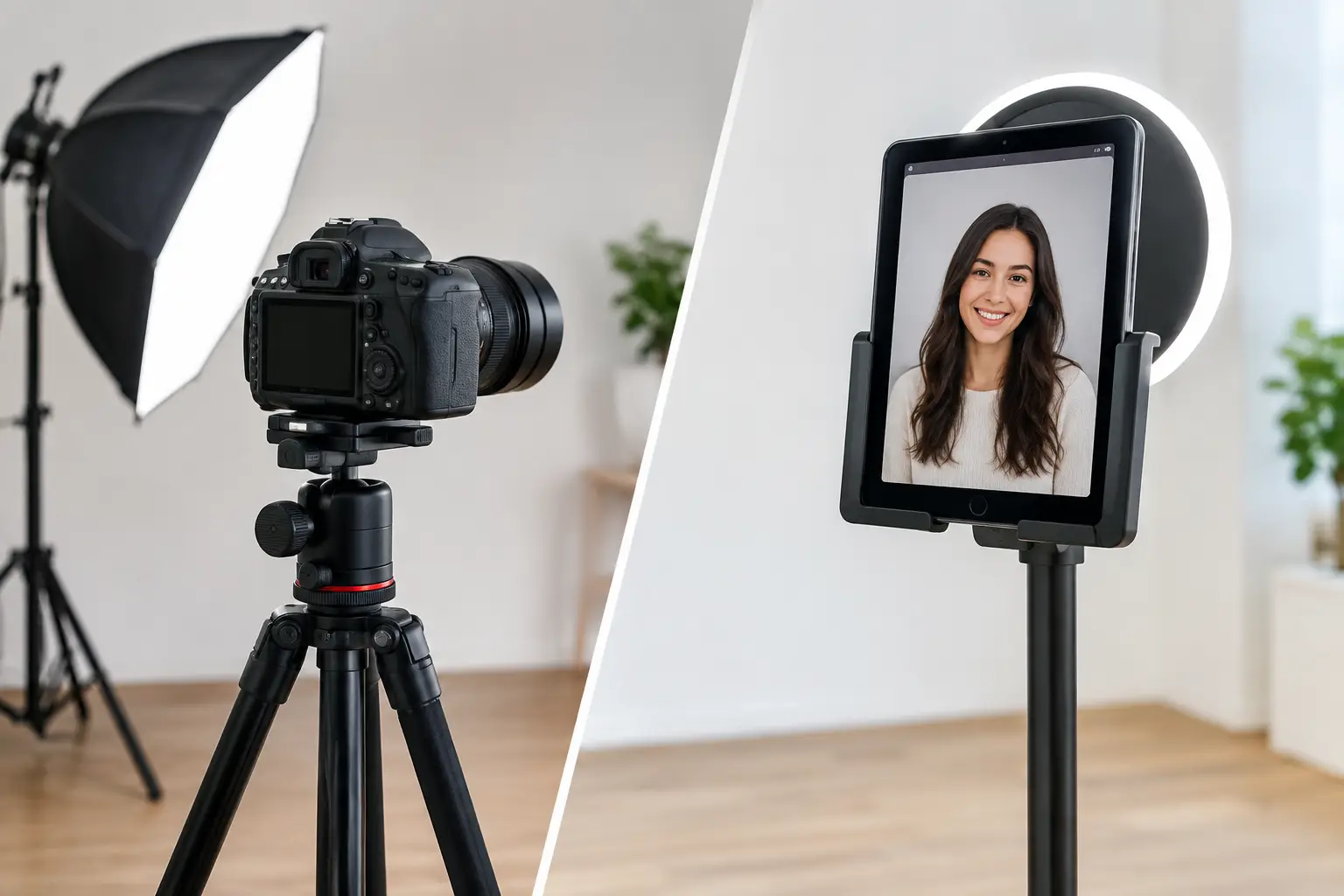
A DSLR booth uses a dedicated interchangeable-lens camera, typically paired with professional lighting, a polished enclosure, and image-capture software. It is designed to produce the kind of sharp, flattering imagery guests associate with professional photography. With the right setup, it can create editorial portraits, crisp group photos, and clean images that remain strong in print, on social, and in branded recap materials.
An iPad booth uses the tablet’s built-in camera and touchscreen as its primary capture device. It is compact, intuitive, and often well suited to animated GIFs, boomerangs, digital sharing, and casual self-service moments. Its strength is speed and simplicity, particularly in environments where a lighter footprint and fast social output matter most.
Neither format is automatically better. A well-produced iPad booth can feel modern, playful, and highly interactive. A DSLR booth can feel refined and cinematic, but it needs thoughtful placement, quality lighting, and professional operation to reach its full potential. The distinction is less about hardware labels and more about the experience each setup is built to deliver.
Image Quality Is More Than Resolution
The most visible difference between DSLR and iPad booths usually appears in the final photograph. A DSLR camera has a larger sensor, stronger low-light performance, and greater control over focus, depth, exposure, and color. That matters in ballrooms, galleries, rooftops after sunset, and other event spaces where ambient light is beautiful but inconsistent.
A DSLR booth can separate guests from the backdrop with a more polished sense of depth. Skin tones tend to be more natural, fine details in attire remain intact, and images hold up well when a guest wants to print, frame, or post a full-resolution portrait. For a gala, wedding, executive event, or luxury brand activation, those qualities reinforce the level of the occasion.
An iPad camera performs best in controlled or well-lit settings. In bright spaces, it can produce attractive, shareable content with minimal friction. But under difficult lighting, the image can look softer, flatter, or more processed. This may be perfectly appropriate for a colorful daytime pop-up or a quick-moving employee celebration. It may feel less aligned with an event that has invested heavily in floral design, wardrobe, scenic elements, and a premium visual identity.
Lighting deserves equal attention. A great camera without intentional lighting will not create great event portraits. Professional lighting helps ensure that guests look their best regardless of where they stand, what time the event begins, or how the venue lighting changes through the evening.
Guest Experience and Event Flow
An iPad booth is familiar on first glance. Guests immediately understand the touchscreen, can choose a mode, strike a pose, and share their content. That accessibility makes it especially effective for high-volume experiences where a playful, self-directed interaction is the priority.
A DSLR booth can be just as approachable, but it often feels more like a portrait moment than a device. Guests step into a composed setting, receive direction when needed, and walk away with an image that feels considered rather than casual. This distinction is valuable at formal events, where guests may appreciate a professional attendant who keeps the line moving, adjusts posing, and makes every person feel welcomed.
The strongest booth experience is not always the fastest one. At a conference, a compact iPad booth may support rapid badge scans and instant digital delivery. At an awards dinner, the pace may benefit from a DSLR setup that gives each group a polished image worthy of the night. For a wedding, the decision often depends on whether the couple wants spontaneous party content, elevated keepsake portraits, or a blend of both.
Branding and Creative Flexibility
For marketers, a booth is a content engine. Every image can extend the campaign beyond the room, provided the creative treatment feels intentional. Both booth types can incorporate custom overlays, branded digital sharing, data capture, themed interfaces, and tailored backdrops. The difference lies in the visual ceiling.
A DSLR booth is especially effective when a brand wants content that resembles a professional campaign shoot. It can support premium step-and-repeat moments, editorial portrait stations, custom scenic builds, and lighting treatments that complement product packaging or an established brand palette. The images can look at home in an event recap, a social carousel, or an internal communications campaign.
An iPad booth often shines when the concept depends on quick digital interaction. Filters, animated effects, short-form motion, virtual props, and easy self-sharing can make it an engaging fit for product launches, college-focused campaigns, sporting events, and high-energy activations. It can also be physically easier to position in tight spaces where a larger booth build is impractical.
The key question is not simply, “Can it be branded?” Almost any booth can. Ask instead whether the visual output reflects the brand’s standards once it leaves the event. A logo overlay cannot compensate for dim lighting, an unflattering angle, or an image style that feels disconnected from the campaign.
When a DSLR Booth Is the Better Choice
Choose a DSLR booth when photography quality is central to the event experience. It is a natural fit for black-tie galas, weddings, upscale private celebrations, executive gatherings, client dinners, and brand experiences where every guest image should feel elevated.
It also makes sense when the venue has challenging light, when the guest list includes VIPs or media-facing talent, or when print quality matters. A DSLR booth provides more control over the visual environment, which means greater consistency from the first photo to the last.
Professional staffing adds meaningful value here. An experienced attendant does more than troubleshoot equipment. They protect the presentation, encourage participation, manage the guest flow, and make sure the booth remains as polished at 10:30 p.m. as it was when doors opened.
When an iPad Booth Is the Better Choice
An iPad booth is a smart choice when compact design, instant sharing, and informal interaction are the primary goals. It can be ideal for a daytime office event, a fast-paced trade show, a pop-up activation, or a casual celebration where guests want quick, social-first content.
It is also useful when space is limited. A smaller footprint can make it easier to activate a lobby, exhibit area, lounge, or venue corner without competing with the rest of the event design. When paired with an intentional backdrop and a clean branded interface, an iPad booth can still create a distinctive moment.
That said, compact should not mean unattended or improvised. Even a streamlined setup benefits from a clear creative plan, tested sharing workflow, reliable connectivity, and an on-site professional who can keep the experience moving smoothly.
Consider the Full Production, Not Just the Camera
The camera is one part of a successful photo activation. Backdrop design, lighting, print presentation, sharing workflow, staffing, customization, and placement all influence the result. A beautifully designed DSLR booth placed in a dark corridor will underperform. An iPad booth with a thoughtful concept, excellent lighting, and energetic host can exceed expectations.
This is why experienced event partners start with the desired outcome. Do you need refined portraits that honor a milestone? High-volume branded content from a conference floor? An immersive visual moment that draws guests into a campaign? The answer will guide the right capture technology and the level of production around it.
At Pic Station, the goal is never to place a camera in a corner. It is to create a guest-facing experience that feels tailored to the room, the audience, and the occasion.
Before selecting your booth, picture the image your guests will receive and share after the event. If it needs to feel like a professional portrait, choose a production built for that standard. If it needs to feel immediate, playful, and mobile-first, design for speed and interaction. The most memorable choice is the one that makes the event look as considered in every photo as it feels in person.