


12 Aug Trade Show Photography That Works Beyond the Floor
A packed exhibit hall moves quickly. One minute, your booth is quiet enough to reset a product display. The next, a product demo has drawn a crowd, a key prospect is in conversation with your team, and the energy you spent months planning is at its peak. Trade show photography preserves those high-value moments while turning a temporary presence into a lasting visual asset.
For event planners and marketing teams, the assignment is not simply to document that a booth existed. The right coverage should communicate why people stopped, what they experienced, and how the brand showed up in a competitive room. It should feel polished enough for a campaign recap, useful enough for sales follow-up, and immediate enough to support social content while the event is still underway.
What Trade Show Photography Should Actually Capture
A wide shot of the convention floor has its place, but it rarely tells the full story. Effective event imagery balances scale with specificity. It captures the architecture of the activation, the branding details that make it distinctive, and the human interactions that prove the experience connected.
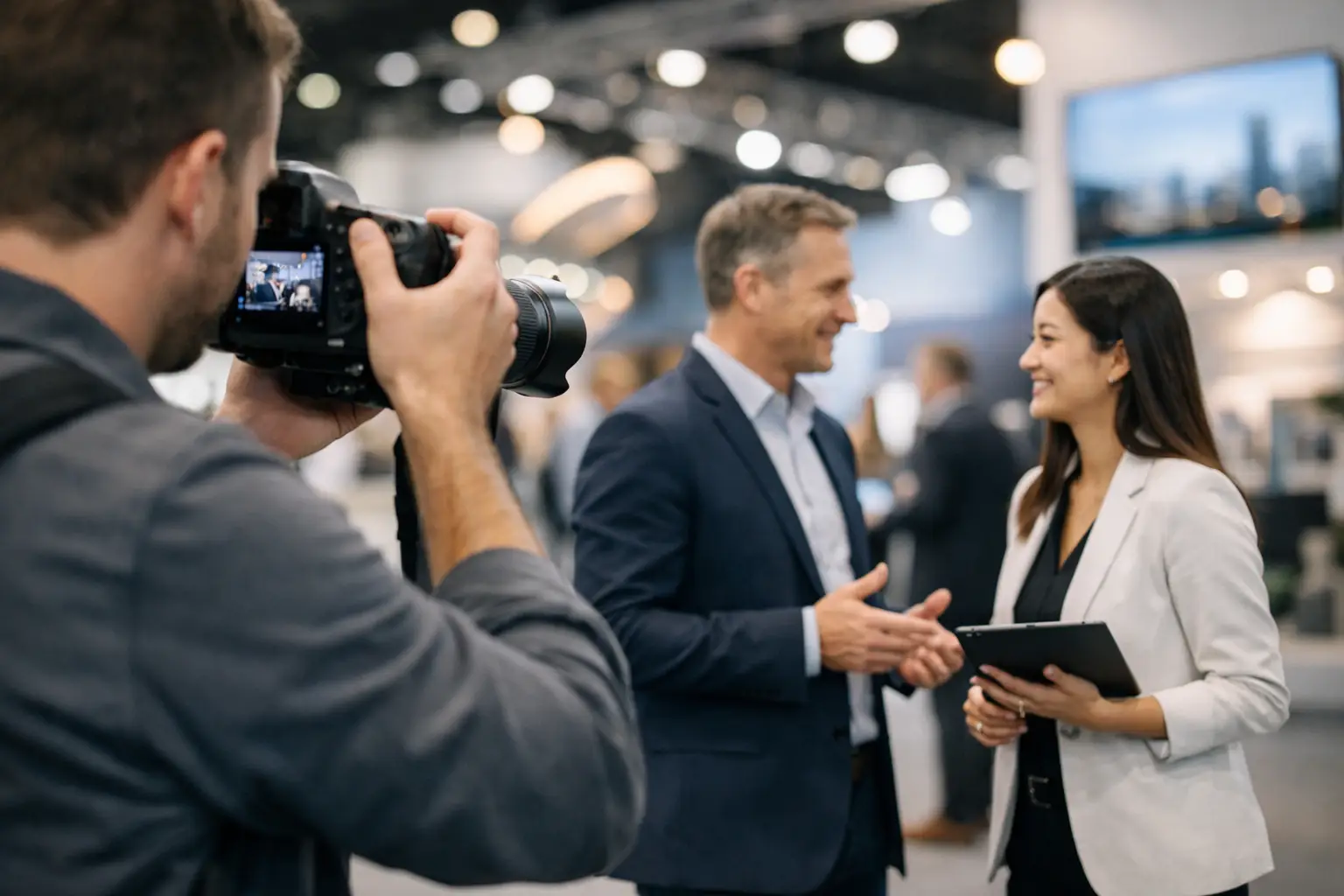
For a corporate exhibitor, that may mean photographing the booth before doors open, when signage, lighting, displays, and product placement are immaculate. Once attendees arrive, the focus shifts to genuine engagement: a demonstrator answering questions, a visitor trying a product, a full seating area during a presentation, or an executive meeting with a client.
The strongest gallery also includes details that marketing teams can use repeatedly. Branded materials, custom installations, elevated catering, hands-on technology, and intentional styling all reinforce the investment behind the experience. These images give future decks, recap emails, recruitment materials, press outreach, and next year’s event promotion a more refined visual language.
People Matter More Than Empty Booths
An empty booth photograph can be beautiful, particularly when a space has been designed with care. But the energy of a trade show lives in the people inside it. Attendees provide scale, movement, and proof of interest. Staff members bring expertise and personality. Clients and partners add credibility.
That does not mean every frame should be a crowd shot. A thoughtful photographer looks for expressions, gestures, and moments of connection without making guests feel interrupted or staged. The result is imagery that feels editorial rather than transactional.
Why a Shot List Is Only the Starting Point
A clear shot list is essential, especially when several stakeholders need specific images. It prevents key requirements from being missed: sponsor visibility, executive portraits, product launches, keynote speakers, award presentations, or a particular branded installation.
Still, a trade show floor does not follow a script. The most compelling images often happen between planned moments. A high-profile visitor stops by unexpectedly. A live demo turns into a crowd. A team celebrates after a successful presentation. A photographer needs the awareness to recognize those moments and the event experience to capture them without disrupting the flow.
Before the show, align on the visual priorities. Consider which moments matter most to the business after the doors close. Is the goal to demonstrate lead-generating activity, create social-ready content, document partner participation, showcase a product, or build a library of polished brand imagery? The answer affects where the photographer spends time and what they watch for.
It also helps to identify the non-negotiables. Brand marks, key speakers, VIPs, product details, and the busiest activation windows should be communicated in advance. That structure creates room for the creative instincts that cannot be planned.
Lighting Is the Difference Between Documentation and Brand Content
Convention centers are built for flexibility, not always for flattering photographs. Mixed overhead lighting, LED displays, dark presentation areas, reflective surfaces, and high ceilings can make a well-designed booth appear flat or overly harsh in the wrong hands.
Professional trade show photography accounts for these conditions before the first attendee arrives. Exposure, color balance, flash technique, and lens selection all affect whether skin tones feel natural, signage remains legible, and the booth’s colors appear true to the brand. A photographer should know when to use available light to preserve atmosphere and when carefully controlled supplemental lighting will create a cleaner, more polished frame.
This matters particularly for premium activations. If your booth includes cinematic lighting, a custom build, an immersive environment, or a sleek photo moment, the imagery should preserve that intent. Flat, poorly balanced event photos can make a sophisticated installation look ordinary. Well-crafted images extend its impact.
Give the Photographer Access to the Right Moments
The best event photographer cannot capture moments they cannot reach. At a large convention, logistics make a real difference. Ensure they have proper credentials, know where the booth is located, understand the event schedule, and have a direct point of contact who can flag priority moments.
For presentations or executive appearances, reserve a practical sightline when possible. For product demonstrations, let the photographer know when the strongest audience turnout is expected. These small decisions help the coverage feel intentional rather than reactive.
Build Coverage Around the Full Attendee Experience
Trade show success is rarely confined to the booth itself. Depending on the event, your visual story may include arrival moments, conference sessions, private client dinners, partner activations, after-hours receptions, and team celebrations. Capturing the wider experience gives marketing teams a more complete narrative than exhibit-floor imagery alone.
This is where photography and interactive visual experiences can work especially well together. A high-end photo booth or immersive 360 video activation gives guests a reason to participate while producing branded content they are excited to share. Meanwhile, roaming event photography documents the energy around the activation: the line forming, the reactions, the group photos, and the branded environment in action.
The two services solve different needs. A booth creates a deliberate, guest-facing moment with a customized output. Event photography creates a flexible, documentary record of everything unfolding around it. For a major brand activation, combining them can provide both participation-driven content and a polished visual recap.
Plan for Real-Time Needs Without Sacrificing Quality
Marketing teams often need a select set of images during the show for social posts, internal updates, press opportunities, or on-site screens. That is reasonable, but it requires a workflow designed around speed and precision.
Discuss real-time priorities before the event begins. A photographer can focus on delivering a small, curated selection of high-impact frames while continuing to capture the full assignment. The goal is not to rush every image out of the camera. It is to provide timely content that still meets the visual standard your brand expects.
For multi-day conferences, daily selects can also help teams adjust. If one activation area is receiving exceptional engagement, it may deserve additional coverage the following day. If the event is more executive-facing than anticipated, the visual emphasis can shift toward meaningful conversations and leadership presence.
How to Make Your Booth More Photogenic
Photography should not dictate an event design, but a few production choices can dramatically improve the finished images. Clear branding at multiple heights, thoughtful lighting, uncluttered demo areas, and enough room for guests to interact all make a booth easier to photograph well.
Consider the attendee’s point of view. Can someone take in what the brand does from several feet away? Is there a visually distinctive focal point? Does the experience create natural moments for people to pause, participate, or pose? The most photographed activations are usually not the loudest. They are the ones with a clear idea and an experience worth sharing.
For teams producing an event in Nashville or traveling to a national convention, it can be useful to involve the visual production partner early. Early alignment helps ensure that branded assets, event flow, photography coverage, and guest engagement work together instead of competing for attention.
A Gallery That Keeps Working After Load-Out
The value of trade show photography grows after the booth is dismantled. Strong images can support post-show communications, sales outreach, social campaigns, future sponsorship conversations, case studies, recruiting, and event planning presentations. They give internal teams evidence of momentum and give prospective attendees a reason to visit next time.
That long-term usefulness is why coverage should be approached as part of the event strategy, not an afterthought. A polished gallery does more than prove that people attended. It shows the level of care, conversation, and connection your brand created in the room.
The show floor may disappear overnight, but the right images keep the experience visible, credible, and ready for its next opportunity.